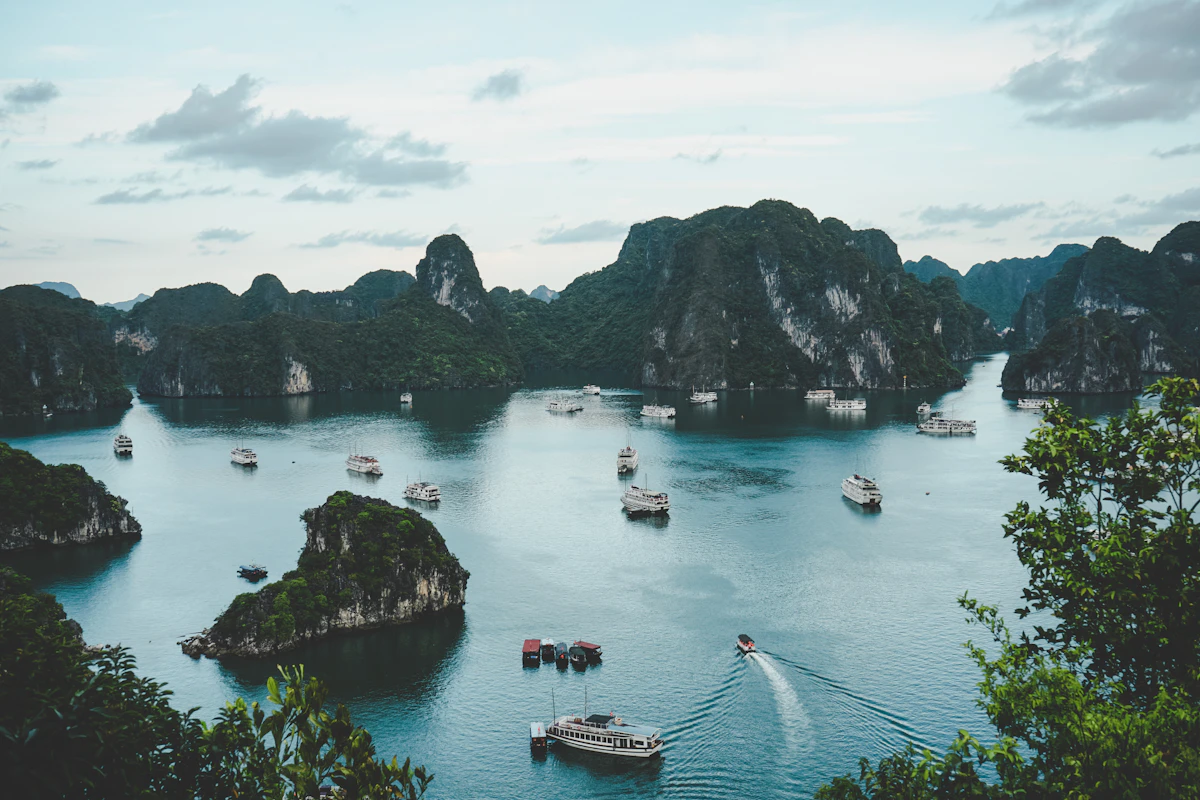
Ninh Binh is open all year, but the difference between June and October is enormous when you are sitting in an open boat for three hours. This is what each stretch of the year is actually like, including the short rice harvest window everyone chases.
Ninh Binh works all year, which is both true and useless as advice. It is a set of limestone valleys about 95km (roughly 60 miles) south of Hanoi, and the way you see it is from a hand-rowed sampan with no roof over your head, so heat, rain and crowds land on you harder here than they would at a museum. Some months are spectacular and packed. Others are quiet and gray and cheap. Here is what each stretch of the year actually feels like from the boat.
The climate in one paragraph
This is northern Vietnam, so it has four distinguishable seasons rather than the wet-and-dry split of the south. Summer, roughly June to August, is hot and humid with short violent downpours. Winter, December to February, is genuinely cold by Vietnamese standards and you will want a jacket. Spring and autumn are the transitions, and the mildest. The local twist is that you spend two and a half to three and a half hours sitting still on open water between limestone walls that throw the sun straight back at you. At the same air temperature, a boat always feels hotter than the shore.
Late May to early June: the Tam Coc rice harvest
This is the picture that sells Ninh Binh. The paddies along the Ngo Dong river at Tam Coc turn gold, and from the ridge above Hang Mua you look down on an entire valley of ripe rice curling between karst towers. It is worth planning a trip around. Two warnings. The window is short, a few weeks, and it shifts each year with the harvest. And it is the busiest stretch of the year: weekends mean long waits at the piers, and rooms in the Tam Coc area sell out. Come midweek and book a month ahead.
September to November: the most comfortable stretch
If you want the trip to be pleasant rather than photogenic, this is your window. It is dry, the light is soft, and three hours in a boat does not leave you cooked. The roughly 500 steps up at Hang Mua feel like a walk rather than an ordeal. There are far fewer visitors than in rice season or at festival time, so you are not queuing at the pier. The valleys are green rather than gold, which is less dramatic in photographs, but you get to move at your own pace.
January to March: festivals, pilgrims and drizzle
After Tet, the lunar new year, northern Vietnam goes on pilgrimage, and Bai Dinh pagoda receives enormous numbers of domestic visitors. Festivals also take place around Hoa Lu, the tenth-century capital, in this same stretch. The countryside is bright green, the air is cool, and the fine drizzle that hangs about turns the limestone hazy and rather lovely in person. The trade-offs are crowds, full car parks and higher room rates. If you want the noise and color of a Vietnamese festival, come now. If you want quiet, do not.
June to August: hot, green, and strictly a morning trip
Midsummer is the greenest the valleys get, the waterways are full, and mountain snails come into season on local menus. It is also punishingly sunny in the middle of the day, and there is no shade on a sampan. The fix is simple: do everything outdoors before 9am or after 3pm, and eat, nap or sit in a cafe in between. Rain rarely wrecks a day here because the showers are short and heavy and then finished, but the boats are open, so pack a light rain jacket.
December and early January: cold, empty and cheap
Winter is the quietest time of year. Mornings can start under fog sitting on the water, which looks otherworldly in person even if it photographs as gray mush. Room rates soften and you can have most of a boat route to yourself. Dress properly for it: the wind comes straight across open water and it is noticeably colder afloat than on the bank, so bring one more layer than you think you need.
Time of day matters as much as month. Seven in the morning in July beats ten in the morning in October, every time: flat water, empty caves, no queue at the pier. Whatever season you land in, be on a boat before eight and the entire day improves.
Which window suits you
- Best photographs: late May to early June, midweek, with a room booked a month out
- Most comfortable weather and shortest queues: September to November
- Festival atmosphere, if you do not mind crowds: January to March
- Cheapest and emptiest: December, with warm layers
- Traveling with young children or older parents: skip June to August, and skip midday
Before you book
- Harvest dates move, so confirm with your accommodation a couple of weeks out if the gold rice is the point
- Vietnamese public holidays fill everything: Tet in late January or February, and the breaks around 30 April and 2 September
- Storms can reach the north coast in late summer and autumn, and piers may suspend boats, so check your cancellation terms
- A brimmed hat, sunscreen and long sleeves earn their place in every month, because the boats are open to the sky
- Carry small notes in cash: tipping the person rowing you is normal practice here