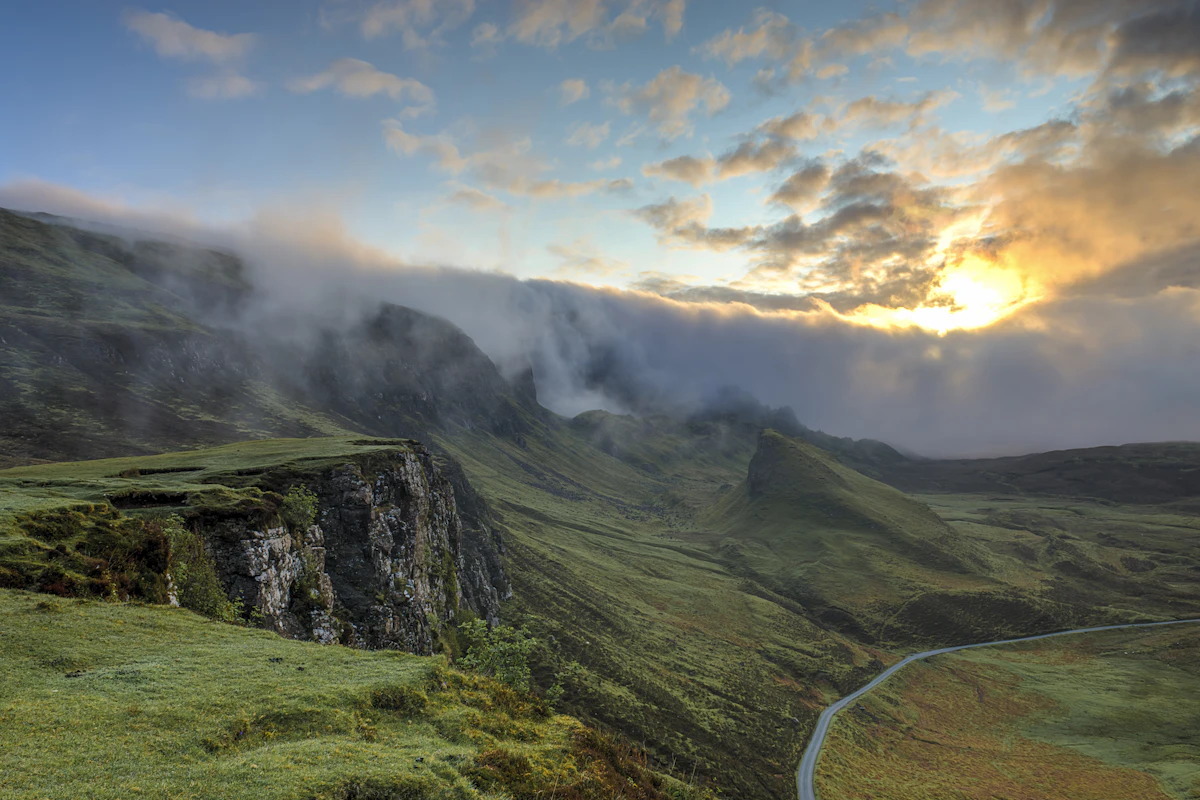
September to November is the honest answer: dry skies, clear water and mist on the lake at dawn. But every season here delivers a different lake, and the waterfall is at its most impressive in the months everyone tells you to avoid.
The best time to visit Ba Be National Park is September to November, when the rains have stopped, the water settles clear and the mornings arrive with a thin layer of mist across the lake. That is the short answer and it holds. But this is a mountain lake in far northern Vietnam, about 240km (roughly 150 miles) from Hanoi, and each season here produces a genuinely different trip rather than a better or worse one. If your dates are already fixed, what matters is knowing what you are getting.
The climate in one paragraph
Northern Vietnam has four seasons rather than the wet-and-dry pattern of the south. Summer, from roughly May to September, is hot and wet, and the rain here falls hard and briefly rather than all day. Autumn is dry and mild. Winter is cool to genuinely cold, especially at night and especially in the hills, and it comes with low cloud and drizzle. Spring warms up and greens over. The lake sits at about 145m (475 feet) above sea level in limestone country, so it runs a little cooler and mistier than Hanoi in the same week.
September to November: the clearest water
The rain has just finished, sediment has settled and the lake turns the deep green it is photographed in. Skies are dry, the sun is warm rather than punishing, and early mornings often come with mist lifting off a flat surface. Those conditions suit both halves of the trip: comfortable hours in an open boat, and dry footing on the forest trails inside the park. If you are only ever going to see Ba Be once, come now.
December to February: cold, still and very quiet
Winter mornings can bury the lake in fog so thick the far shore disappears, then burn off into pale sunshine by mid-morning. Visitor numbers drop away and the villages go back to their own rhythm, which is the appeal. The cost is comfort: stilt houses are wooden, open and unheated, and nights get cold enough that a fleece and a warm jacket are not optional. Photographers who like moody, empty water should aim squarely at this window.
Long Tong, the Tay festival at the start of the lunar year
Around the ninth to eleventh days of the first lunar month, usually in February, villages around the lake hold Long Tong, the Tay going-to-the-fields festival that opens the farming year. Expect a crowd, a market day, ball-throwing contests and then hat then, the sung poetry the Tay are known for. It is the most alive the area gets, and the busiest. Beds around the lake number in the dozens, not the hundreds, so book three or four weeks out if you want to be there.
March to May: green, empty and cheaper
The forest around the lake comes back into leaf, the weather warms steadily and the summer rain has not arrived. Visitor numbers are moderate, which makes it the easiest season to find a boat, fill the spare seats and negotiate a fair rate. Two caveats: the first heavy showers often turn up in late April, and the Vietnamese public holiday at the end of April fills every homestay for a long weekend.
June to August: high water and the waterfall at full strength
This is Dau Dang's season. The Nang River runs hard through the boulder field at the end of the lake, and the falls are the most impressive they get all year, while the surrounding forest is at its greenest and the air noticeably cooler than the plains. In return you take on the rain. Heavy downpours can leave the lake cloudy for a day, roads slick, and the trekking routes and the wild Tham Phay cave temporarily off the table.
The best time to visit Ba Be National Park, compared
- Clear water and photographs: September to November
- Dau Dang waterfall at full power: June to September, and accept the rain
- Fewest visitors and softest prices: March to May, outside the holiday weekend
- Local festival and village life: the first lunar month, usually February
- Avoid: the long weekends around 30 April and 2 September, when boats and rooms are both stretched
Whatever month you pick, the lake is at its best in the first two hours after sunrise, when the surface is glassy and the day boats have not arrived. That is true in every season and it matters more than the week you choose. If you are only going out on the water once, make it early, and agree the departure time with your boatman the night before.
What the weather does to your plans
- In the wet months, ask your homestay about road and water conditions before you leave Hanoi
- In winter, pack heavier layers than a tropical country suggests, because the stilt houses are open to the air
- In summer, take the boat at dawn or late afternoon; the middle of the day on open water is fierce
- Around the festival and public holidays, reserve rooms weeks rather than days ahead
Pairing Ba Be with the rest of the north, by season
Ba Be is the calm option among northern Vietnam's mountain destinations, and the season nudges which one you should pair it with. Autumn is the strongest window for the whole region, so it also suits Ha Giang and Sapa. Summer favors Ba Be over the high passes, since the lake is cooler than the plains and the waterfall is at its peak, while heavy rain on a motorbike loop is miserable. Winter is Ba Be's quietest, mistiest face and pairs naturally with Cao Bang and Ban Gioc waterfall, roughly four to five hours away by road.
Season by season, what to pack
- Autumn: light layers, a windproof jacket for the boat, and sunscreen, since there is no shade on the water
- Winter: a proper warm jacket, thermals for the night, and something waterproof for the drizzle
- Spring: light clothes and a rain shell for the first storms of the season
- Summer: quick-drying clothes, a wide-brimmed hat, insect repellent and shoes with grip for wet rock
- All year: cash, because the nearest ATM is in Cho Ra town about 15km (9 miles) away