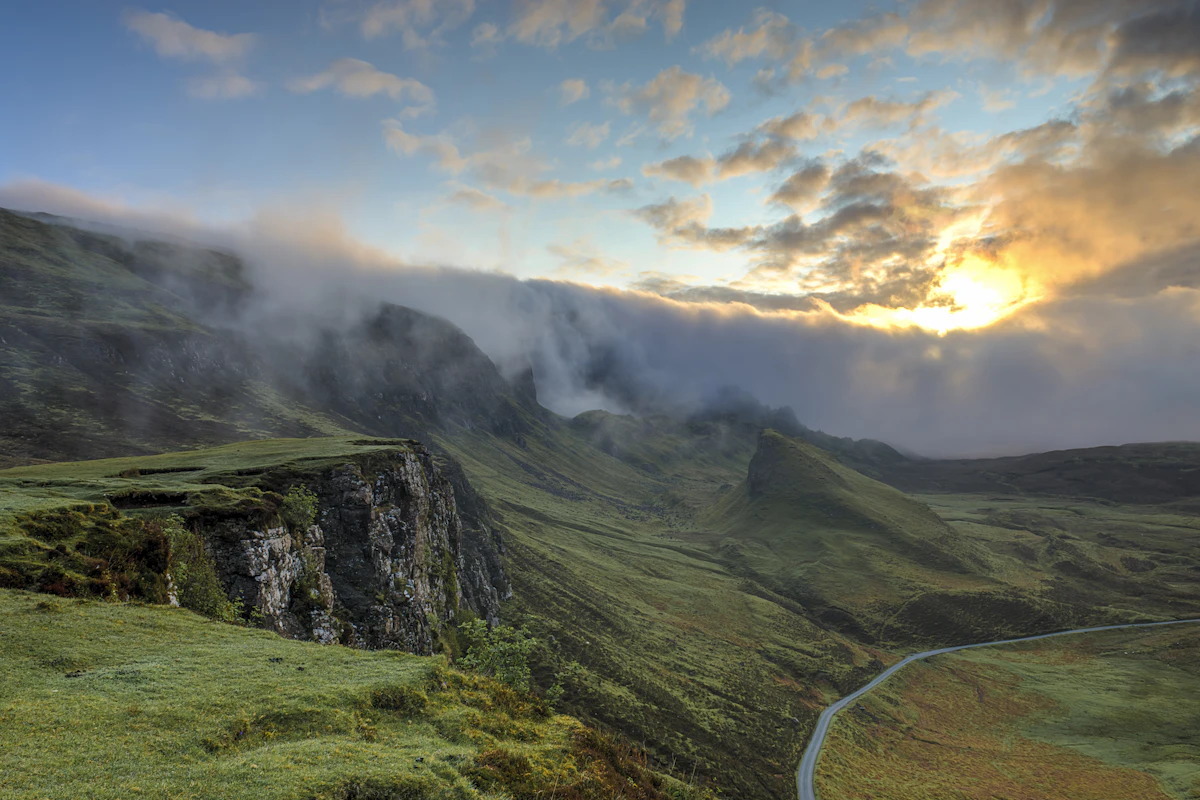
Late September through November is the strongest window for Ha Giang: dry roads, clear air, gold rice terraces and then the buckwheat flowers. Here is what each season actually looks like up on the plateau, and which months are worth thinking twice about.
If you only get one shot at Ha Giang, aim for late September through November. That window gives you the driest roads on the loop, the clearest views down into the Nho Que gorge, and the two landscapes the region is known for: gold rice terraces around September, then hillsides of pink and pale purple buckwheat flowers through October and November. Every other month is a trade-off between scenery, cold and how safe a mountain road is on two wheels. Here is what each season actually looks like up on the plateau.
The quick answer
- Best overall: October and November, for buckwheat flowers, dry roads and cool clear air, with the biggest crowds of the year
- Best for rice terraces: September, when Hoang Su Phi turns gold
- Best for blossom and village festivals: January to March, if you can handle real cold
- Hardest riding: May to September, the rainy months, when the passes turn slick and landslides happen
October and November: buckwheat flower season
This is Ha Giang's headline season and the busiest time on the loop. As autumn sets in, fields of buckwheat come into flower and wash the slopes around Sung La, Pho Cao and Lung Cu in pink and pale purple. It photographs beautifully against gray limestone, which is exactly why half the photographers in Hanoi head north at the same time. The flowers are a working crop rather than a display: the seed gets ground into the small, dense buckwheat cakes sold hot at market stalls. The weather is cool and mostly dry, with genuinely cold mornings, and you will want a jacket on the bike.
September: the rice harvest at Hoang Su Phi
If terraced rice is what drew you to Vietnam, September is your month. The terraces at Hoang Su Phi, west of Ha Giang town, ripen to gold on slopes that drop hundreds of meters from ridge to valley floor, and by then the heavy rain is easing and the skies are clearing. The catch is geography. Hoang Su Phi lies in the opposite direction from the Dong Van plateau, so seeing both properly means adding at least one day, and realistically two, to the trip.
January to March: blossom, festivals and serious cold
Spring on the plateau means peach and plum blossom in the villages and yellow mustard flower along the valley floors, with villages at their liveliest around Lunar New Year, which falls in late January or February depending on the year. The trade-off is temperature. This is properly cold, sometimes with frost on the high sections, and mornings are often lost to fog thick enough to keep you off the bike until it burns off. Pack as though you are going somewhere cold, because most people arrive with tropical Vietnam in mind and get caught out.
May to September: the rainy months
Summer is the greenest the plateau ever looks and it is cooler than the lowlands, but this is the rainy season and rain changes the character of the loop entirely. Mountain roads turn slick, visibility drops on the passes, and landslides do close sections at short notice. If you plan to ride yourself and have limited experience on mountain roads, this is the window to avoid, or the one where hiring a local driver stops being a luxury and starts being sensible. Within it, May and June bring the water-pouring season, when flooded terraces mirror the sky.
Do not book anything non-refundable around the buckwheat flowers. The bloom shifts by a week or two every year with the weather, and rooms fill months ahead in October. Aim for the middle of the window rather than its edges, and treat the flowers as a bonus rather than the point of the trip.
Mountain weather changes within the hour
Whatever month you pick, the plateau does not run on a single daily forecast. It is normal to leave Dong Van in sunshine, ride into cloud at the top of a pass twenty minutes later and come out the far side in drizzle. Locals dress in layers for exactly this reason and so should you. Check the forecast each morning before you set off rather than trusting the one you read in Hanoi, and be willing to sit out a bad hour over coffee instead of riding a pass in fog.
Crowds, prices and holidays
- October and November are peak season: book rooms and Nho Que boat trips well in advance
- Vietnamese public holidays and weekends fill the loop with domestic groups, and midweek is calmer year-round
- Room rates climb in flower season, so expect the top of any price range you are quoted
- The quietest months are the wet ones, which is a real trade-off rather than a bargain
Before you pick your dates
- September for rice terraces, October and November for buckwheat flowers, January to March for blossom and cold
- Add a day if you want both Hoang Su Phi and the Dong Van loop, because they lie in different directions
- Pack a warm layer and a windproof jacket in every season, summer included
- In the wet months, budget extra time for weather delays and think hard about hiring a driver rather than riding
- Book accommodation and buses early for October and November, and midweek if your dates allow