The 1954 battlefield is spread through the middle of a working provincial town, which makes it unusually easy to walk. This is the shortlist of what to see, what each site was during the siege, and what is worth seeing once the history is done.
Most people fly to this valley for one reason: the siege that ended French rule in Indochina in the spring of 1954. What surprises them is how ordinary the setting is. The strongpoints, the command bunker and the cemetery sit among houses, phone shops and roundabouts in a working provincial town, so the things to do in Dien Bien Phu are close together, cheap and unusually easy to walk between. Here is the shortlist, in the order that makes the story readable.
A1 Hill, which the French called Eliane 2
Start here. A1 was the most fiercely contested strongpoint of the whole campaign, changing hands repeatedly over weeks of close fighting, and it is preserved rather than tidied. You walk up through restored trench lines and dugouts, past a wrecked tank, to the huge crater left when the Viet Minh detonated an explosive charge in a tunnel dug beneath the French position in the closing days. From the top you can see how small the defended valley floor is, which explains the outcome better than any display case.
The de Castries command bunker
On the flat ground below the hills sits the command post of Colonel Christian de Castries, who led the garrison: a low, sandbagged structure under corrugated iron, restored with map tables and radio sets, surrounded by the remains of the wire. This is where the surrender came on May 7, 1954. It takes half an hour and is quietly the most affecting thing in town, partly because it is so small and so exposed.
The Dien Bien Phu Victory Museum and its panorama
The museum sets out the whole campaign through weapons, personal objects, photographs and the logistics story that is often the most startling part for foreign visitors: bicycles reinforced to carry hundreds of kilos of rice, artillery hauled by hand over mountains the French believed impassable. Its centerpiece is a vast panoramic painting that wraps around the viewer, among the largest works of its kind anywhere, taking the siege from the first supply columns to the surrender.
The Victory Monument and A1 Martyrs' Cemetery
The bronze Victory Monument stands on D1 hill above the town, reached by a long flight of steps, and is one of the largest monuments in Vietnam. Go for the view as much as the sculpture: from up there the whole basin, the airstrip and the ring of hills read as a single map. Below, opposite A1 Hill, the martyrs' cemetery holds row upon row of headstones, most of them unnamed. It is a place of active remembrance, not a tourist site, so keep your voice down and dress accordingly.
- Him Lam and Doc Lap, the outlying strongpoints the French called Beatrice and Gabrielle, fell first and are marked with monuments on the edge of town
- The valley floor still carries the line of the airstrip the garrison depended on, now beside the modern airport
- Site entry is small, an estimated 30,000 to 100,000d each, roughly US$1 to 4, and cash only at most gates
- Mornings are cooler and quieter at every one of these sites
The Muong Thanh valley and the rice
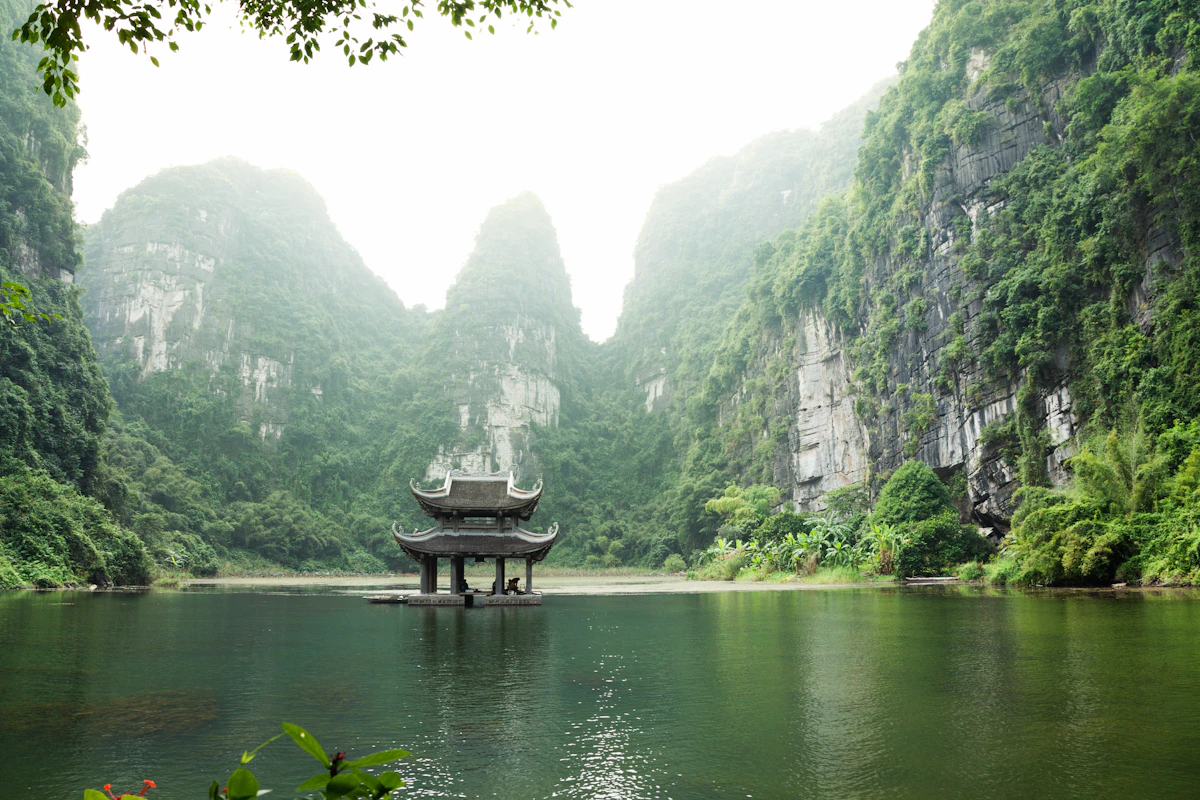
Once the history is done, the valley itself is the attraction. Muong Thanh is the largest rice basin in northwest Vietnam and the fields run flat and wide to the hills on both sides, gold at harvest and a hard bright green the rest of the year. Drive or ride a few kilometers out of the center and you are among farms and irrigation channels, which is a useful counterweight to a morning spent in trenches.
Pa Khoang Lake, hot springs and Pha Din Pass
- Pa Khoang Lake: a reservoir in forested hills east of town, calm, green and an easy morning out
- U Va and Hua Pe hot springs: the standard local way to spend an afternoon, with simple bathing pools rather than a spa
- Pha Din Pass: roughly 100km (60 miles) east on the highway toward Son La, one of the four great passes of the northwest and a genuine highlight if you are driving in rather than flying
- Thai villages around the valley: stilt houses, the xoe circle dance and a shared tray of grilled food, usually arranged through a hotel or homestay
Ban Phu citadel and the markets
Ban Phu citadel, north of the center, is the remains of a walled stronghold linked to an eighteenth-century local uprising, and it is a helpful reminder that this valley was strategic long before any European arrived. The town markets are the other non-military stop, and the thing to buy is Dien Bien rice, which Vietnamese shoppers rate among the best in the country, along with smoked buffalo meat for the flight home. A Pa Chai, the westernmost point of Vietnam where three borders meet, is out there too, but it requires advance registration and permission from the border post.
Do the hill before the museum. Standing in the trench on A1 first, then seeing the campaign laid out in the panorama, turns a room of artifacts into an explanation. Visitors who reverse the order almost always say the museum washed over them.
Practical notes on the things to do in Dien Bien Phu
- Read a short account of the 1954 siege before you fly, because the labeling assumes you know the story already
- Carry small notes: entry gates and village stops rarely take cards
- Wear proper shoes and bring water, as A1 Hill and the monument steps are open and exposed
- Dress modestly at the cemetery and keep photography discreet, as families come here to remember relatives
- Hire a car with a driver or a motorbike through your hotel for the out-of-town sites, since public transport is not built for visitors
- Allow a full day for the battlefield cluster and a second for the valley, the lake and a village