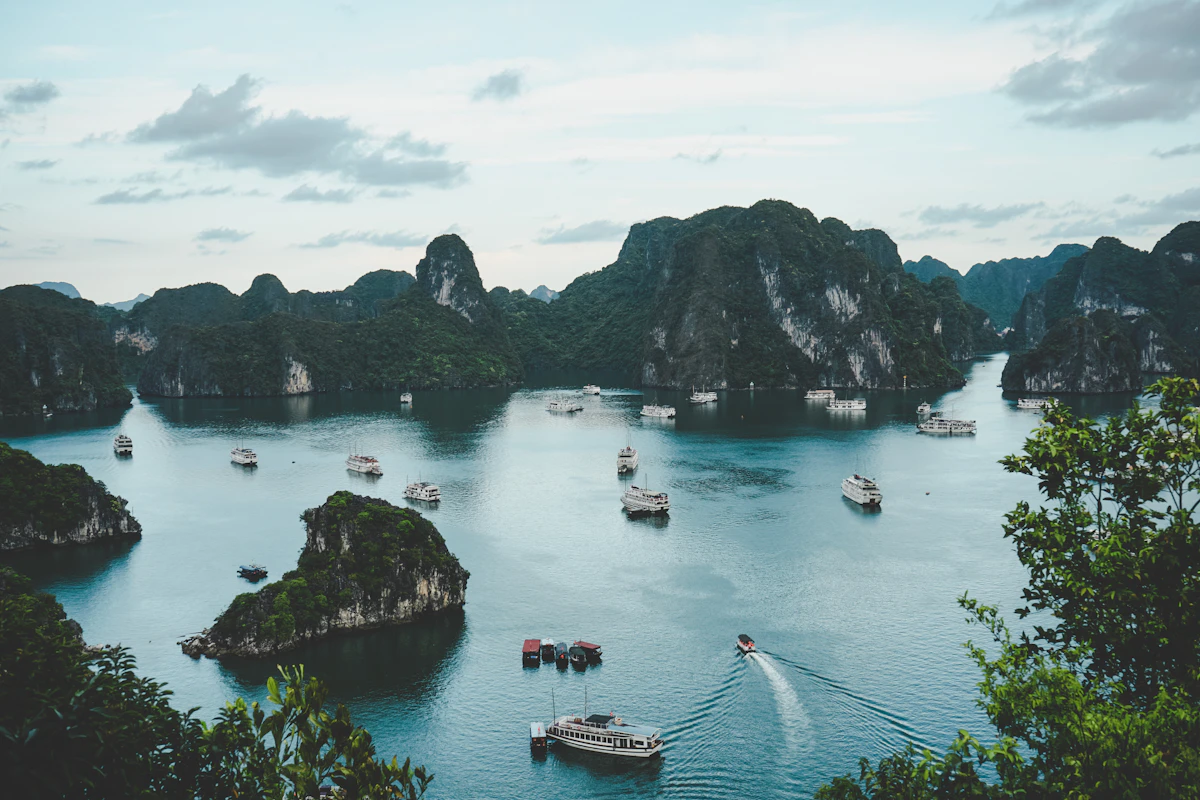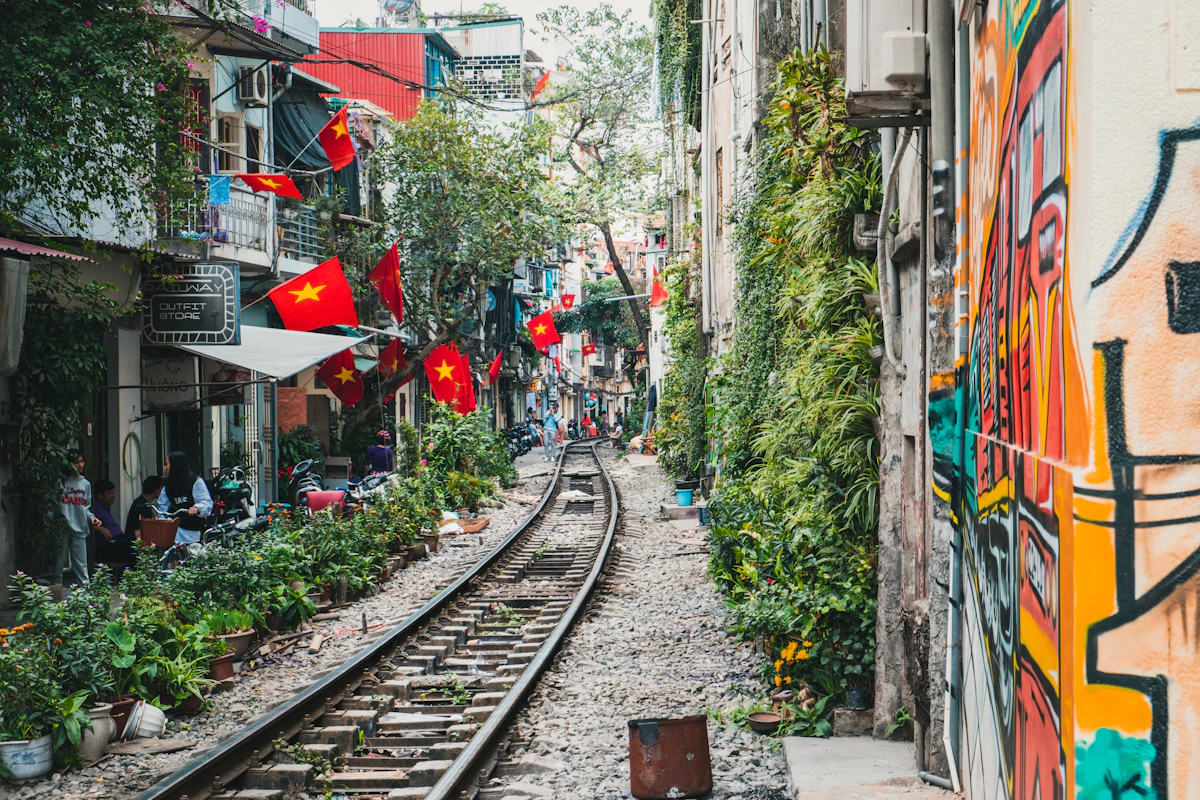
Hanoi's sights are unusually close together, which means the hard part is not getting to them but deciding what deserves an actual morning. This is the shortlist, grouped the way you would sensibly walk it.
Hanoi packs a thousand years of capital-city history into a center you can walk across in half an hour, which is both the appeal and the problem. The list of sights is long and most of them are close together, so the useful question is not what exists but which of the things to do in Hanoi actually deserve a morning. This is the shortlist, grouped the way you would sensibly walk it rather than ranked, because the geography is what will really shape your days.
Hoan Kiem Lake and Ngoc Son Temple
The lake is the middle of everything, socially as much as geographically. Come at 6am and it belongs to people doing tai chi, badminton and laps; come at dusk and it belongs to couples and ice cream. In the water sits the small Turtle Tower, and on an island near the north shore is Ngoc Son Temple, reached by the red-painted The Huc bridge. From Friday evening to Sunday night the surrounding streets close to traffic and turn into a pedestrian zone with buskers and traditional games.
- Ngoc Son Temple entry: an estimated 30,000 to 50,000d (roughly US$1 to 2), open from around 7am
- Best times: early morning for local life, late afternoon for the light
- Free to walk the full loop, which takes about 25 minutes at a stroll
The Old Quarter's 36 streets
North of the lake, the Old Quarter is a dense grid of narrow lanes where each street was historically named for the trade practiced on it, and a surprising number still are: Hang Bac for silversmiths, Hang Ma for votive paper and decorations, Hang Gai for silk and tailoring. Dong Xuan Market sits at the northern end and is the wholesale heart of the whole thing. Do not over-plan this. Walk, get lost, buy something, sit down when a stool appears.
The historic quarter: Temple of Literature, the Citadel and Hoa Lo
West of the Old Quarter is the cluster that carries the city's older history. The Temple of Literature was founded in the 11th century as Vietnam's first university and is still where students come before exams; entry is an estimated 30,000 to 70,000d. The Thang Long Imperial Citadel is a UNESCO World Heritage Site with layers from several dynasties, including a wartime command bunker. Hoa Lo Prison, built by the French and later holding American pilots, is the most affecting hour in the city and the one most people say they did not expect.
Ho Chi Minh Mausoleum and One Pillar Pagoda
The mausoleum sits in a wide ceremonial square in Ba Dinh district, with the tiny One Pillar Pagoda and the stilt house nearby. Entry is free but this is not a casual drop-in: the hours are short and morning-only, it usually closes on Mondays and Fridays, bags and cameras go into storage, and shoulders and knees must be covered. Check the day before you build a morning around it, and expect a queue that moves quickly and silently.
West Lake for the afternoon
When the Old Quarter starts to feel like a lot, go north to West Lake, the largest lake in the city and a different pace entirely. Tran Quoc Pagoda, on a causeway near the southeastern shore, is the oldest pagoda in Hanoi and photographs beautifully in late light. Tay Ho Temple draws a steady stream of worshippers, especially at the start of the lunar month. The shore road is lined with cafes, and the whole area is the standard answer to what to do with a slow afternoon.
Eat: the shortlist
Food is not a side activity in Hanoi, it is one of the main reasons to come. Most of these cost between 25,000 and 70,000d, which is roughly US$1 to 3, and the best versions are usually the places with the smallest menus.
- Phở bò: beef noodle soup in a clear, slow-simmered broth, eaten for breakfast here
- Bún chả: grilled pork patties with cold rice noodles, herbs and a sweet-sour dipping broth. A lunch dish
- Chả cá: turmeric-marinated fish fried at your table with dill and spring onion
- Bún thang: a delicate, layered chicken and egg noodle soup that takes hours to make
- Egg coffee: coffee under a whipped topping of egg yolk and condensed milk, at an estimated 25,000 to 45,000d
- Bia hoi on Ta Hien street: fresh unpasteurized draft beer, poured into a glass on a plastic stool for roughly 10,000 to 15,000d
French-era Hanoi, museums and Long Bien Bridge
The colonial-era architecture is a real part of the city's texture and mostly free to look at. St Joseph's Cathedral is a neo-Gothic block wedged into a cafe-lined square, and the Opera House anchors the wide-boulevard French Quarter south of the lake. For depth, the Museum of Ethnology out toward the west is the single best explanation of Vietnam's 54 ethnic groups you will find, with full-scale houses in the grounds, and the National Museum of History is worth an hour. At the northeastern edge, the century-old Long Bien Bridge still carries trains and motorbikes over the Red River, and you can walk it.
Group your sights by neighborhood and do them in one half-day block. Hanoi looks small on a map and it is, but crossing the center twice in an afternoon costs you an hour in traffic and a lot of goodwill. One morning for the lake and the Old Quarter, one for the Temple of Literature and Ba Dinh, one afternoon for West Lake, and you have covered the city.
Practical notes on the things to do in Hanoi
- Check closing days before you go, particularly for the mausoleum, which is usually shut on Mondays and Fridays
- Do the Old Quarter and the lake early in the morning or after dark to dodge both heat and crowds
- Carry small notes, because street stalls and temple ticket windows rarely take cards
- Wear shoes you can walk all day in, and expect the sidewalks to be occupied by parked motorbikes
- Dress modestly for temples and pagodas, which means covered shoulders and knees