Dien Bien Phu is a pilgrimage rather than a general holiday stop, and it needs planning that most Vietnam destinations do not. This guide covers getting there from an international arrival, what it costs, when to go and how to organize the days on the ground.
This Dien Bien Phu travel guide is written for someone flying in from a long way away, who knows what happened here in 1954 and wants to stand in it. That framing matters, because Dien Bien Phu is not a general-purpose holiday town. There is no beach, no old quarter and no headline landscape you would cross the country for. What there is, in a valley 470 to 500km (about 290 to 310 miles) northwest of Hanoi, is the battlefield where the French garrison surrendered on May 7, 1954, ending French rule in Indochina and setting up the partition of Vietnam.
What is actually here
The town sits on the floor of the Muong Thanh valley, the largest rice basin in northwest Vietnam, ringed by hills. The French built an entrenched camp around an airstrip on that floor; the Viet Minh took the hills, hauled artillery over mountains the French thought impassable, and closed the ring. The preserved sites are strung through the modern town: A1 Hill, the de Castries command bunker, the Victory Monument, the martyrs' cemetery and the Victory Museum with its panoramic painting of the campaign. Beyond the history there is a working upland province of Thai and Hmong villages, lakes, hot springs and rice.
Getting there from your arrival airport
Your chain is international flight to Hanoi, then Hanoi to Dien Bien Phu. Nothing else is practical. The domestic hop takes roughly an hour and the airport is minutes from the historic sites, on the same flat ground as the wartime airstrip. The overland route is a sleeper bus, usually leaving in the evening and arriving at dawn.
- Domestic flight from Hanoi: roughly one hour, the sensible choice on a two-week trip, and best booked ahead for March and early May
- Sleeper bus from Hanoi: an estimated 300,000 to 450,000d one way, roughly US$12 to 18, and something like 9 to 11 hours depending on the road
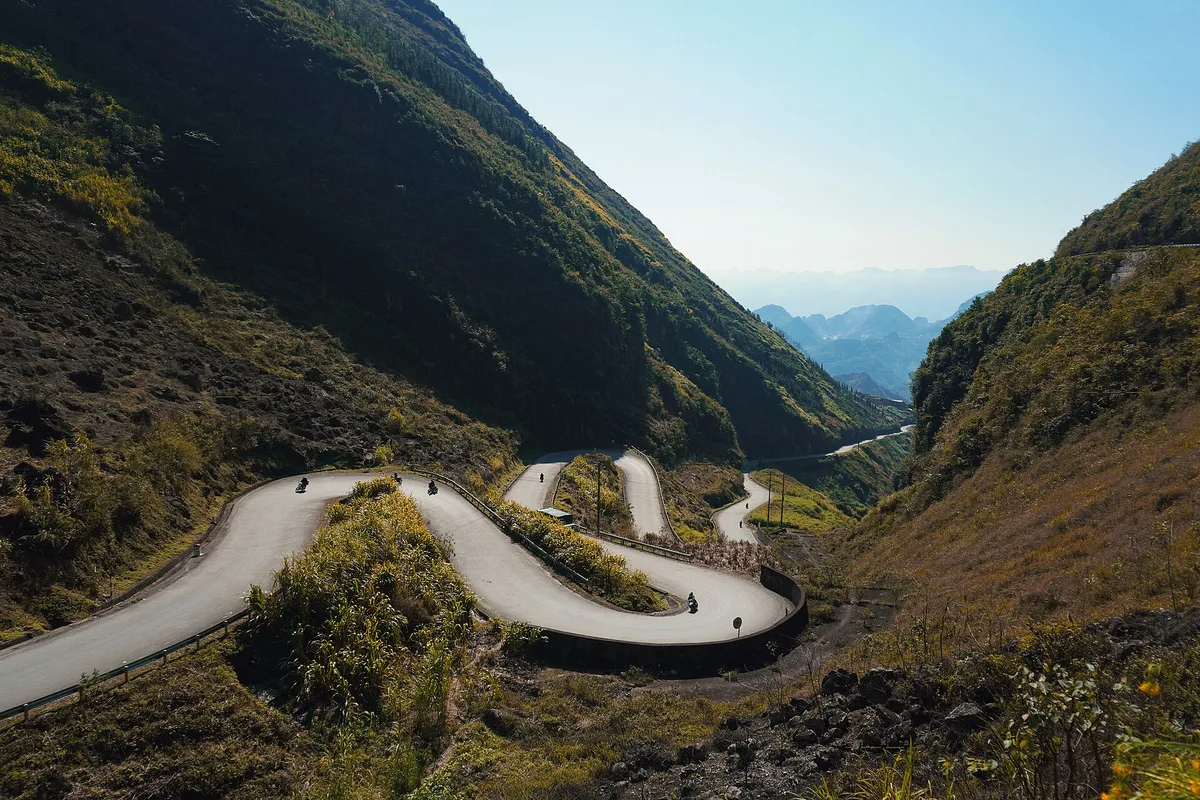
- Self-drive by car or motorbike over the mountain highway through Mai Chau and Son La: a fine multi-day route, not a shortcut
- In town: motorbike hire, taxis and ride apps cover everything, and the battlefield cluster is walkable
When to go, briefly
The dry season runs roughly October to April and is the practical window for outdoor sites. March brings the ban blossom across the hills and a festival with it; the first week of May brings the anniversary of the surrender, ceremonies and a full town. The wet months, roughly May to September, are green, cheap and empty, with heavy afternoon rain and slower mountain roads.
How long to give it
Two days and one night if you fly in and out and only want the battlefield. Three days and two nights if you also want the valley, a lake, a hot spring and an afternoon in a Thai village, which is what most visitors settle on. Longer only makes sense if you are driving the northwest circuit or arranging a trip to A Pa Chai, the westernmost point of Vietnam where three borders meet, which needs advance permission from the border post.
Dien Bien Phu travel guide: what it costs
Estimates per person, and they move with season and booking timing. Airfares are the wild card and are not included in the overland total.
- Budget guesthouse or small hotel in town: an estimated 250,000 to 500,000d a night, roughly US$10 to 20
- Mid-range hotel: an estimated 400,000 to 800,000d a night, roughly US$16 to 32
- Thai village homestay: an estimated 150,000 to 350,000d per person, roughly US$6 to 14, often with dinner
- Site entry: an estimated 30,000 to 100,000d each, roughly US$1 to 4, cash only in most cases
- Three days overland, all in: an estimated 1,900,000 to 3,500,000d, roughly US$75 to 140, plus airfare if you fly
Eating and sleeping
Food here belongs to the Thai people of the uplands, a group unrelated to Thailand: charcoal grills seasoned with mac khen, a numbing wild mountain pepper, sticky rice steamed in a wooden pot, grilled river fish and buffalo dried over the kitchen fire. Beds are concentrated in the middle of town within easy reach of the sites, with village homestays as the alternative if you want the culture rather than the convenience. Book ahead for March and for the first week of May, when the town genuinely fills.
Spend an evening before you fly reading a short account of the siege, ideally one that names the French strongpoints. On the ground, the signs are written for Vietnamese visitors and assume the story is already known, so the difference between an interesting morning and a genuinely moving one is about ninety minutes of reading at home.
Practicalities on the ground
- Carry cash in small notes: ATMs exist in town, but gates, markets and village hosts want notes
- Save your hotel address in Vietnamese on your phone, as English is limited once you leave the front desk
- Bring warm layers from December to February and rain protection from May to September
- Buy a local SIM or eSIM at the Hanoi airport rather than waiting, since coverage in the valley is fine but shops are few
- Dress modestly at the cemetery and keep photography discreet, because families visit relatives there
- Arrange the out-of-town sites and any border-area trip through your accommodation, at least a day ahead
Where it fits in a Vietnam trip
- Treat it as an out-and-back flight from Hanoi, not as a stop between two other places
- It competes for the same days as Ha Giang and Sapa, and loses that contest unless the history is your reason for coming
- It combines well with a northwest driving loop through Mai Chau and Son La if you have a spare week
- Continuing west into northern Laos through the Tay Trang crossing, roughly 35km away, is the one genuine onward route