Mai Chau has no hotel district, so the choice is which village and which kind of building. This compares stilt houses in Ban Lac and Pom Coong, rice-field bungalows and eco-lodges, with honest price bands.
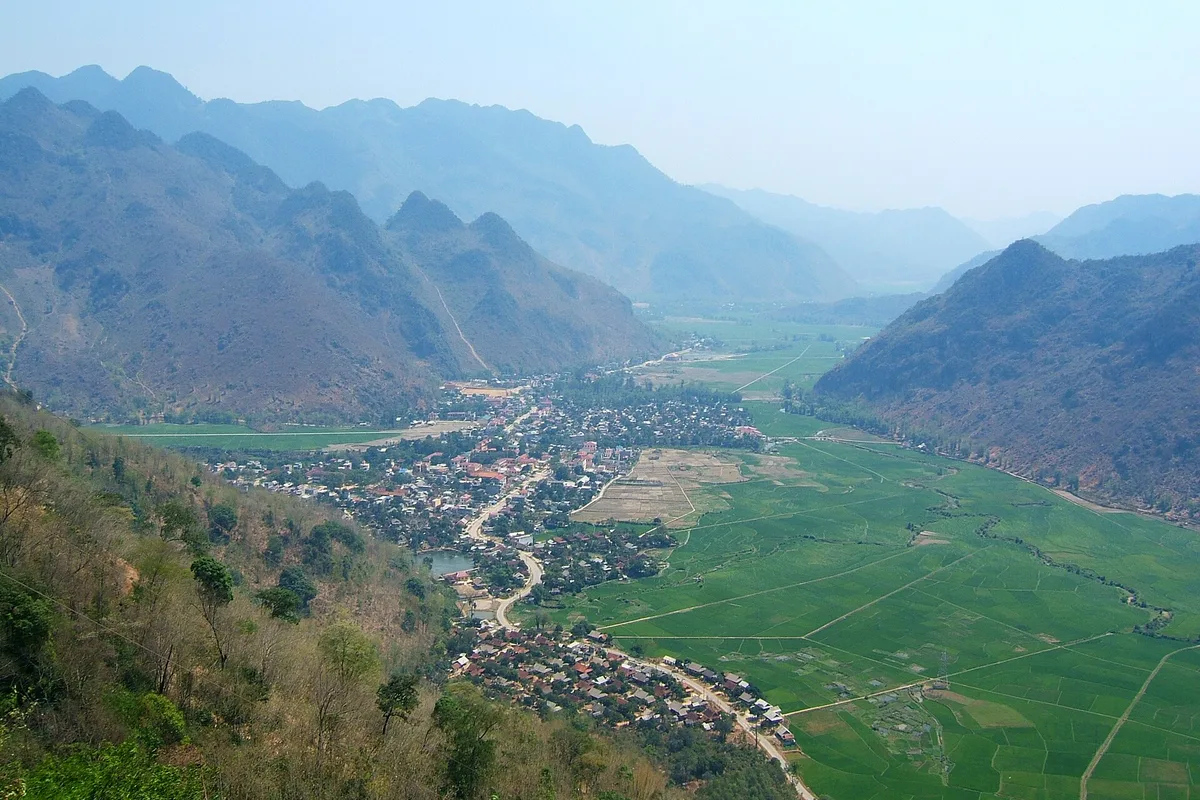
Where to stay in Mai Chau is a question about which village and which kind of building, not which hotel. The valley has no hotel district and very few properties an international chain would recognize. What it has is wooden stilt houses in two adjoining villages, bungalows out among the rice fields, and a handful of resorts around the edges. This guide explains what each of those actually means, what they cost and how to choose between them. It names no specific properties, because ownership and standards here change faster than any article can track.
Ban Lac: the obvious choice, and the busiest
Ban Lac is the village most visitors mean when they say they stayed in Mai Chau. It has been hosting guests since the 1990s, which means the houses are set up for it: clean bedding, hot water, hosts who speak some English, dinner on request and bicycles at the door. It also means a main lane lined with textile stalls and a steady flow of day-trippers through the afternoon. Stay here for convenience, choice and company in the evening.
- Strengths: easiest to book, most facilities, food and bike rental on site, everything walkable
- Weaknesses: the most commercial corner of the valley, busy by day, limited privacy in shared houses
- Best for: first-timers, groups of friends, anyone arriving without a fixed plan
Pom Coong: the same valley, a quieter lane
Pom Coong sits a few minutes' walk from Ban Lac and offers essentially the same thing with fewer stalls and fewer people passing through. The stilt houses are built to the same design, the dinners are the same spread, and you can stroll over to Ban Lac in ten minutes if you want the evening bustle. For most travelers weighing up the two, this is the better default.
- Strengths: quieter, more residential in feel, identical access to the valley lanes
- Weaknesses: fewer places to eat outside your own homestay, slightly less choice
- Best for: couples, light sleepers, anyone returning for a second visit
Rice-field bungalows outside the villages
Scattered across the valley floor are small properties built as individual bungalows or garden rooms looking straight onto the paddies. You get a private bathroom, a door that locks, a terrace and a view of green or gold depending on the month, and you give up the sociability and the immersion of sleeping in a family house. Most still serve the same local dinner and many rent bicycles, so you lose less than you might think.
- Strengths: privacy, a proper bed, rice-field views, considerably better photographs
- Weaknesses: pricier, more isolated, and you may need to ride into the villages
- Best for: couples, families with young children, anyone who sleeps badly in shared space
Eco-lodges and resorts
At the top of the range sit a small number of resort-style properties with pools, restaurants, landscaped grounds and rooms built in a stilt-house style rather than in an actual stilt house. They are comfortable and quiet, and they are the right answer if what you want from Mai Chau is two days of doing very little. They are also the least connected to the village life that presumably brought you here, and they cost several times what a homestay does.
What a stilt-house homestay involves
Worth knowing before you book, because homestay means different things in different parts of Vietnam. Here it usually means a real wooden house on posts, with one large upstairs room where mattresses are laid out in a row on the polished floor, each with a pillow, a heavy blanket and a mosquito net. Bathrooms are usually downstairs and shared. Dinner is eaten together at low tables and is normally the best food you will have in the valley.
- Shared floor sleeping: a mattress in a row, curtained or netted, rather than a dorm bunk
- Private room: a partitioned room in the same house, sometimes with its own bathroom
- Hot water and Wi-Fi are standard, air conditioning is not, though fans are usual
- Nights are cool from November to March and stilt houses are open to the air
Where to stay in Mai Chau: what you will pay
These are per-night estimates and they shift with season, weekend and how far ahead you book. Harvest weekends and Vietnamese public holidays are the expensive dates.
- Shared floor in a stilt house: roughly 100,000 to 200,000d per person (about US$4 to 8)
- Private room inside a homestay: roughly 300,000 to 600,000d (US$12 to 24)
- Rice-field bungalow or design homestay: roughly 500,000 to 1,000,000d (US$20 to 40)
- Eco-lodge or resort: from roughly 1,000,000d (US$40) and upward
- Dinner is usually extra, at an estimated 150,000 to 250,000d a head
Ask two questions before you book anything here: is dinner available, and are the beds on a shared floor or in a private room. Those two answers decide most of what your evening feels like, and listing photographs routinely show a tidy private-looking corner of a room that in practice sleeps twelve people side by side.
Questions worth asking
- Is dinner served, and is it included in the rate or charged separately
- Shared floor or private room, and how many people sleep in the house
- Are bicycles available, and are they included or rented by the day
- Can they arrange transport back to Hanoi, and on which days
- Is the property in Ban Lac, in Pom Coong or out in the fields, and how long is the walk
Booking notes
- Book two to four weeks ahead for the two harvest windows, weekends and public holidays
- Off season you can often turn up and find a bed the same day
- Read recent guest photographs rather than the professional ones
- Bring cash, because village-level properties rarely take cards
- Traveling as a couple, take the private room if the price gap is small