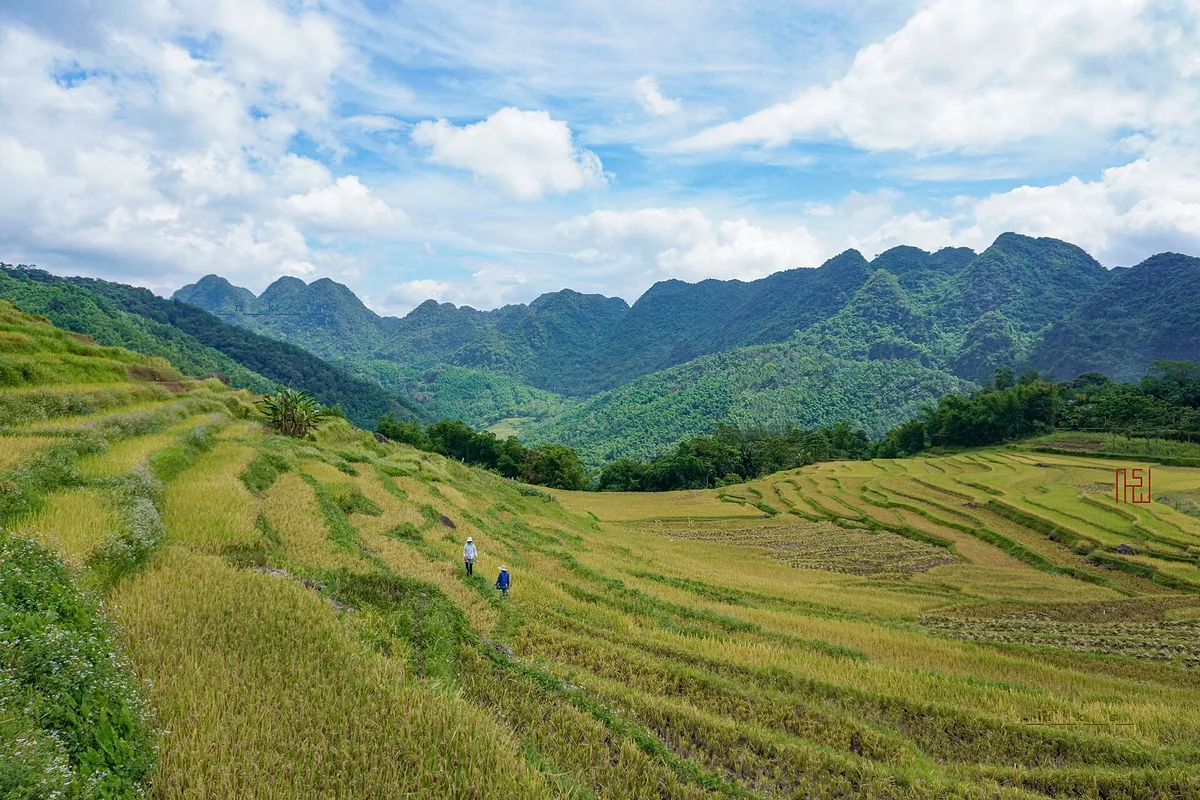
Pu Luong is four to five hours from Hanoi each way, so the length of your stay is mostly arithmetic. Here is what one, two, three and four nights each buy you, and how the reserve fits alongside Sapa, Ha Giang and Ninh Binh in two weeks.
Pu Luong sits about 160-180km (roughly 100-110 miles) southwest of Hanoi, which on a map looks like a morning's drive and in practice is four to five hours each way on mountain roads. That travel time is the whole argument, because working out how many days in Pu Luong to spend is mostly subtraction: take the road off both ends and see what is left. This is what each length of stay actually buys, and where a nature reserve in Thanh Hoa province fits alongside everything else competing for a two-week Vietnam trip.
How many days in Pu Luong: the short answer
Three days and two nights. It is the length almost every Vietnamese traveler uses, and it works for a visitor for the same reasons: one afternoon and evening on arrival, one full day for the waterfall and the far valley, one unhurried morning before the drive back. Two nights is what turns Pu Luong from a long drive into a rest. Anything shorter and you spend more hours in a vehicle than out of one, a poor trade after a flight of 12 to 24 hours.
The travel you cannot avoid
There are no flights and no trains into the reserve. From Hanoi you either drive, take a shared limousine van or take a public coach toward Ba Thuoc and Canh Nang, and any of those runs roughly four to five hours depending on traffic leaving the capital and how the mountain section behaves. If you are arriving on an international flight into Noi Bai airport, do not attempt this on landing day. Spend a night in Hanoi, sleep off the time zone and leave early the next morning.
- Hanoi to the reserve: roughly 4-5 hours each way by car, van or coach
- Coach or limousine seat: an estimated 150,000-350,000d each way (roughly US$6-14)
- Coming by public coach means arranging a pickup from the drop-off point, as taxis in the area are scarce
- Aim to finish the last mountain section in daylight, because none of it is lit
Two days and one night: doable, but tight
One night works if a weekend is all you have. Leave Hanoi at first light, arrive early afternoon, walk the terraces above Ban Don at golden hour and eat dinner in a stilt house. Next morning you get Hieu waterfall and lunch before the drive back. You will see the two things Pu Luong is known for and nothing else. For most people who have flown from the other side of the world, the ratio of road to valley is wrong.
Three days and two nights: the balanced trip
The second night is what buys the far side of the reserve. Day two becomes a proper day out: the waterfall in the morning, then over the pass to Kho Muong, a village sitting in a closed valley with a large limestone cave at its edge. Day three still leaves a slow morning before you go. It is also the point at which you stop working through a list and start noticing things, like the bamboo waterwheels lifting stream water into the paddies and the walk behind the village at dawn.
Four days and three nights: the plateau and the summit
A fourth day opens two options that three cannot hold. One is Son Ba Muoi, three villages on a small high plateau that stays cool all year, reached by a steep narrow pass worth hiring a local driver for. The other is the climb to the top of the reserve at around 1,700m (roughly 5,600 feet), a full day on foot through old forest that has to be done with a local guide. Take four days if you came to walk rather than to sit on a balcony above a valley.
Five days or more: add Mai Chau
Beyond four days a single valley starts repeating itself. The usual extension is to pair Pu Luong with Mai Chau, a broader, flatter valley of stilt-house villages that sits on the same road back toward Hanoi, and give it a night on the way out. That makes a five-day loop that never doubles back. It is the version worth doing if you have already spent a week in cities and want the countryside to be the point of the trip rather than a detour from it.
Where it fits in two weeks in Vietnam
A standard two-week trip runs Hanoi, one northern mountain or bay, Hoi An and Da Nang in the center, then Ho Chi Minh City and the Mekong Delta or a beach. Pu Luong takes the northern slot and competes with Sapa, Ha Giang and Ninh Binh rather than adding to them. Choose it over Sapa for fewer people, warmer weather and half the travel time. Choose Sapa or Ha Giang if you want high dramatic mountains and will pay for them in hours on the road.
Book your last night before the flight home in Hanoi, not in the valley. The drive back is four to five hours at best and the mountain section does not care about your departure time. Coming out a day early costs you one slow morning in Pu Luong and removes the single most stressful variable from the end of a long trip.
What eats more time than you expect
- Distances inside the reserve are short but slow: 20km (12 miles) of pass road can take close to an hour
- Hieu waterfall is a 20-30 minute climb each way beside the water, on rock that is slippery when wet
- Leaving Hanoi in the morning rush can add an hour before you reach open road
- There is no lighting on the mountain roads, so the usable day ends at dusk
- Meals are cooked to order by your hosts, which is pleasant but never quick
Choosing your number of nights
- One night: only if a weekend is all you have, accepting that you see two places
- Two nights: the standard answer, and the right one for most first visits
- Three nights: choose this for the high plateau, the summit trek or simply an unstructured day
- Four nights or more: pair Pu Luong with Mai Chau rather than stretching one valley
- Whichever you pick, arrive in daylight and leave in the morning rather than after lunch