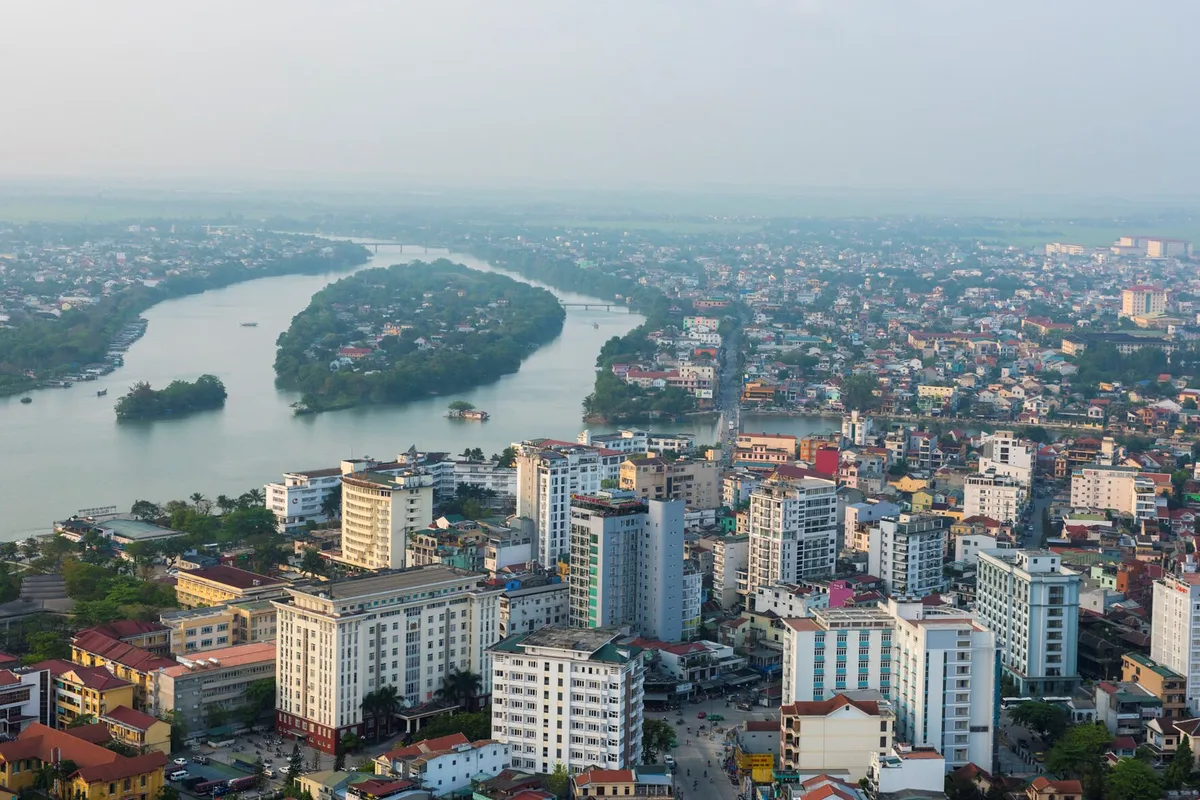
Vietnam's imperial capital for a century and a half, with a walled citadel, a scatter of royal tombs along the river and the most distinctive regional cooking in the country.
Hue was the capital of Vietnam under the Nguyen dynasty from 1802 until 1945, and everything worth seeing here follows from that. A walled citadel on the north bank of the Perfume River, a set of royal tombs scattered through the hills to the south, and a court cuisine that turned into the most distinctive regional cooking in the country. This Hue travel guide covers the sites in the order that makes sense on the ground, what each one costs, and how to fit them into three days without spending the hottest hours walking across open courtyards.
How to use this Hue travel guide to plan the days
The city is compact and everything splits neatly into three groups: the Imperial City and the riverfront in the center, the tombs out in the countryside to the south and southwest, and the pagoda and river trips upstream. Do them as three half-days plus food and you have your trip. Hue is now a centrally governed city in its own right; the province name Thua Thien Hue was retired in the 2025 administrative reorganization, so ignore it on older maps.
- Phu Bai Airport to the center: an estimated 200,000-280,000d (roughly US$8 to 11) by taxi, about 15km (9 miles)
- Train from Da Nang over the Hai Van Pass: about 2.5 to 3 hours, and the best way to arrive
- Rented motorbike: an estimated 120,000-180,000d (roughly US$5 to 7) a day, worth it for the tombs
- Bicycles: often free or cheap from hotels, and enough for the citadel and the riverbank
The Imperial City
The Imperial City, inside the citadel walls, is the reason the city is on the UNESCO list. You enter through the Ngo Mon gate, cross to the Thai Hoa palace with its red lacquered columns, and work back through courtyards, gates, gardens and the ruins of the Forbidden Purple City, much of which was destroyed in the fighting of 1968 and has been under slow reconstruction ever since. That mixture of restored halls and empty foundations is the point; it is a place you read as much as look at.
- Opening hours: roughly 7am to 5pm, sometimes later in summer
- Entry: an estimated 200,000d (roughly US$8) for an adult, cheaper on a combined route ticket
- Allow two to three hours, and go at opening while it is cool
- Bring a hat and sun cover; many of the courtyards have no shade at all
- A guide or audio guide is worth it here, because very little is self-explanatory
The royal tombs
The tombs are not somber. Each Nguyen emperor built his own funerary complex in his lifetime, and they read as landscape architecture reflecting the man who commissioned them. Tu Duc, about 6km (4 miles) from the center, is a park of lotus ponds, pine and pavilions where the emperor wrote poetry; it is the one to visit if you want somewhere to sit. Khai Dinh, about 10km (6 miles) out, is the opposite: a dark, steep, gray concrete hillside monument, European in its bones, with an interior encrusted in porcelain and glass mosaic that is genuinely startling.
Minh Mang, roughly 12km (7 miles) out, is the largest and most formally balanced, laid out along a single axis through gates, courtyards and water. Each of the main tombs charges an estimated 150,000d (roughly US$6). Two in a morning is comfortable, three is a long day, and a motorbike or a hired car makes the difference between an easy trip and a tiring one.
Thien Mu Pagoda and the river
Thien Mu stands on a low hill above the Perfume River about 5km (3 miles) upstream, and its seven-tiered Phuoc Duyen tower is the single most reproduced image of the city. Late afternoon is the time: the light comes off the water and the working monastery behind the tower is quieter then. In the evening, a dragon boat on the river with a short performance of ca Hue, the chamber singing tradition of the old court, runs an estimated 100,000-150,000d (roughly US$4 to 6) per person. It is touristic and it is also the only place you will hear the music.
Do the outdoor sites between seven and eleven in the morning. Hue is hot, exposed and shadeless in the middle of the day, and the afternoon is better spent eating.
The food, which is the other reason to come
Hue cooks differently from anywhere else in Vietnam: hotter, saltier, built on lemongrass and fermented shrimp paste, and descended from a court kitchen that made many small dishes rather than a few large ones.
- Bún bò Huế: beef and pork noodle soup, lemongrass and shrimp paste in the broth, an estimated 30,000-50,000d (roughly US$1.20 to 2). The real version, and nothing like the export
- Banh beo, nam and loc: a trio of small steamed rice cakes with shrimp, served in dishes or banana leaf, an estimated 40,000-70,000d for a mixed plate
- Com hen: rice with tiny river clams, herbs, crackling and chili, cheap and sharp, an estimated 20,000-35,000d
- Chè: dozens of varieties of sweet soup, an estimated 10,000-20,000d a glass
- Royal-style set menus, elaborately presented and considerably more expensive, if you want the court version
A three day plan
- Day 1: the Imperial City in the morning, the riverfront in the afternoon, a boat and ca Hue after dark
- Day 2: Tu Duc and Khai Dinh tombs by bike or car, then Thien Mu for the late light
- Day 3: banh beo for breakfast, Dong Ba market for gifts, coffee by the river before you travel on
- Optional fourth day: the Lang Co lagoon and coast on the way back towards Da Nang
Costs and seasons
- Guesthouse or two-star room: an estimated 250,000-500,000d (roughly US$10 to 19) a night
- Food: an estimated 150,000-250,000d (roughly US$6 to 10) per person per day, eating well
- Site tickets for the whole trip: an estimated 400,000-600,000d (roughly US$15 to 23)
- Three days and two nights, excluding flights or trains: an estimated 1,800,000-3,000,000d (roughly US$70 to 115) per person
- April to June is the best weather; October and November are wet and flood-prone