Goi Cuon: Vietnamese Spring Rolls Done Right
Fresh, unfried rolls of shrimp, pork, noodles and herbs in translucent rice paper, dipped in a thick peanut and fermented soybean sauce.

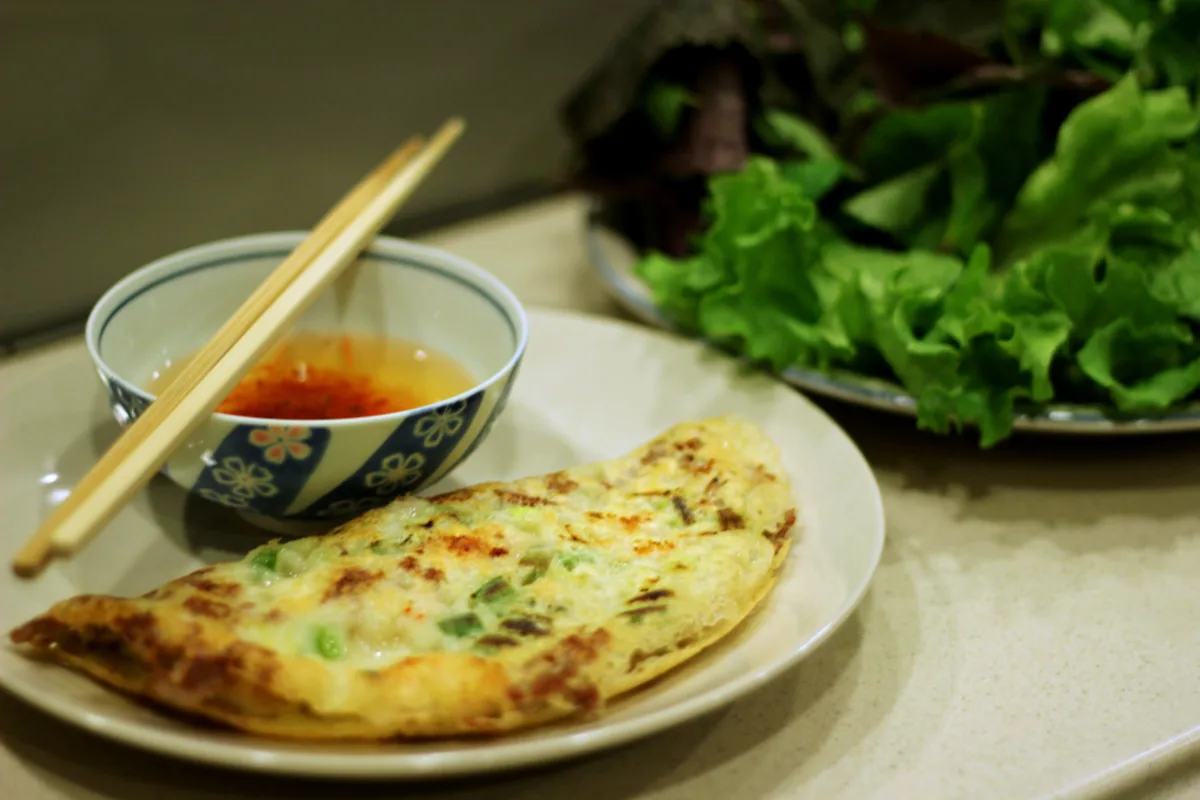
A turmeric-yellow rice flour crepe the size of a dinner plate, fried crisp with shrimp, pork and bean sprouts, then torn up and wrapped in herbs.
Bánh xèo is named after a sound. The word xeo is the sizzle rice batter makes when it hits a scorching, oiled pan, and in the Mekong Delta that pan is enormous: the finished crepe is often the width of a dinner plate or larger, folded once into a half moon and carried to the table still crackling. The batter is rice flour tinted yellow with turmeric and enriched with coconut milk, which is what gives the southern version its particular richness and its lacy, brittle edge. Inside go whole small shrimp, sliced pork belly and a heap of bean sprouts, sometimes with mung bean or shredded jicama. What arrives is not a plate of food so much as a kit. Alongside the crepe comes a basket of raw leaves and herbs, often a startling number of them, and a bowl of nuoc cham, the sweet-sour-salty diluted fish sauce that anchors most southern Vietnamese eating. You tear off a piece of the crepe, lay it on a mustard leaf or a sheet of soft rice paper, pile on herbs, roll it, dunk it and eat with your hands. Done properly it is crisp, rich, herbal and sharp all in the same bite.
Main ingredients
The easiest base for a first taste, roughly three to four hours by road from Ho Chi Minh City. Look along the residential streets away from the riverfront promenade and around the daytime markets, where places often specialize in one or two fillings and fry to order. Many open only in the late afternoon and evening, which is the traditional eating time.
Around 20,000-50,000d per crepe (roughly US$0.80-2)
This is where the wild-herb version comes from. Around the Seven Mountains area of An Giang, the crepe arrives with a basket of foraged leaves rather than the standard lettuce and mint, some of them bitter or astringent in a way that is genuinely unfamiliar. Fillings can include beef or tiny field shrimp.
Around 15,000-40,000d per crepe (roughly US$0.60-1.60)
In the smaller towns strung along the river branches, a plastic awning, a couple of cast-iron pans and a stack of herbs cut from the garden behind is the standard setup, and the version served is usually the plainest and the best. If you are traveling between towns by bus or car, these are the stops worth pulling over for.
Around 15,000-30,000d per crepe (roughly US$0.60-1.20)
Typical price
~$0.5–$2.5 (15,000–60,000₫) Estimate per crepe: roughly 15,000-30,000d (about US$0.60-1.20) at a roadside or market stall, and 40,000-60,000d (about US$1.60-2.40) at larger places or for premium fillings. One delta-sized crepe feeds one to two people. Prices vary by town and season.
An estimate — the price moves with the place, the neighborhood and the hour.
You might also like
Fresh, unfried rolls of shrimp, pork, noodles and herbs in translucent rice paper, dipped in a thick peanut and fermented soybean sauce.
A clear, sweet pork and dried seafood broth over springy noodles, loaded with shrimp, minced pork, quail eggs and offal. Ho Chi Minh City's breakfast of choice.

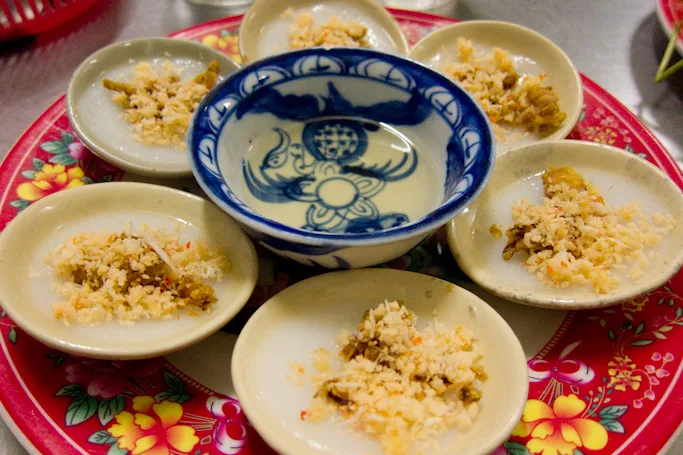
Thumb-sized saucers of steamed rice batter topped with dried shrimp floss and pork cracklings, eaten a dozen at a time in Hue with sweet fish sauce.
New guides, seasonal advice and the occasional route we think is underrated — straight to your inbox.
No spam. Unsubscribe in one click.