Viet Global TravelVietnam travel guide
Banh Beo: Hue's Tiny Steamed Rice Cakes, a dish from Hue, central Vietnam
Regional specialtyStreet foodCheap eatsFamous

Banh Beo: Hue's Tiny Steamed Rice Cakes

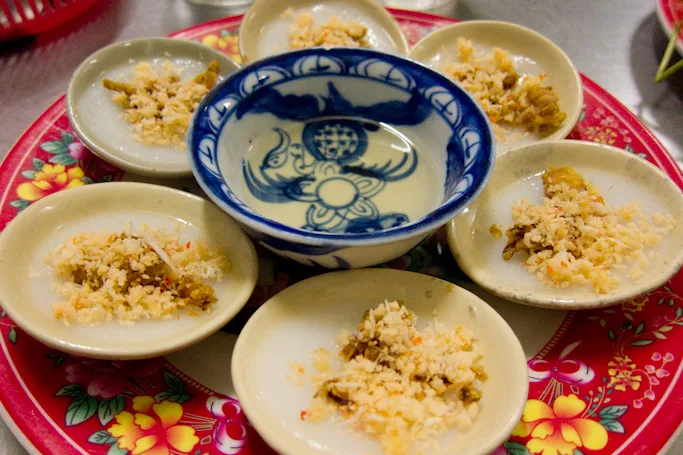
Thumb-sized saucers of steamed rice batter topped with dried shrimp floss and pork cracklings, eaten a dozen at a time in Hue with sweet fish sauce.

From
Hue, central Vietnam
Typical price
~$1–$2 (20,000–50,000₫) Estimate for one serving, which usually means a tray or a stack of eight to fifteen small dishes. Around 20,000-50,000d, roughly US$0.80-2. Prices move with the venue and the season, so ask before you order in a tourist area.
Type
Central Vietnamese steamed rice cakes

What is Banh Beo: Hue's Tiny Steamed Rice Cakes?

Bánh bèo are the smallest thing most visitors eat in Vietnam, and often the dish they end up describing to people back home. The name translates roughly as water fern cake, after the pale floating leaf the shape recalls. Each one is a disc of plain rice batter steamed directly in a small ceramic saucer until it sets soft and slightly dimpled in the middle, and that dimple exists to hold the topping: a fine red-orange floss of dried shrimp, a couple of crisp pork cracklings, a pinch of fried shallot and sometimes a spoon of mung bean paste. They come to the table a dozen or more at a time, on a tray or stacked in a tower of saucers, with a jug of thin, sweetened fish sauce alongside. You pour a little into each dish, loosen the cake from the rim with a small bamboo skewer or the tip of a spoon, and eat it in one bite. Nothing about it is filling, and nothing about it is fast. Eating banh beo is a slow, sociable, faintly ceremonial thing, which is exactly how Hue treats food in general.

Main ingredients

Plain rice flour batter, steamed in individual saucersDried shrimp floss, made by pounding and drying fresh shrimpCrisp fried pork cracklingsFried shallot and scallion oilThin sweetened fish sauce with garlic and chiliMung bean paste, in some versions

Which neighborhood to eat in

The lanes inside the old Citadel, north bank of the Perfume River

The quiet grid of streets behind the Imperial City walls has the highest concentration of long-running family stalls, many of them run out of a front room with a few low plastic tables. Look for a woman steaming saucers over a charcoal pot rather than a display of pre-made trays. These places usually sell the whole family of Hue rice cakes together, so you can order across the menu.

Around 20,000-35,000d per serving (roughly US$0.80-1.40)

The Vy Da neighborhood, southeast of the center

A residential district on the river that has long been associated with rice-cake specialists. Servings here tend to arrive as a full tray of small dishes with a deeper red shrimp floss, and the fish sauce is often better balanced than in the tourist streets. It is a short taxi or ride-hailing hop from the hotels along the south bank.

Around 30,000-50,000d per serving (roughly US$1.20-2)

In and around Dong Ba market on the north bank, near the Trang Tien bridge

The market stalls are the cheap, fast, noisy option, good if you want to eat standing up in the middle of ordinary Hue life and then carry on shopping. Portions are smaller and the surroundings are basic, but the turnover is high, which usually means the cakes are freshly steamed.

Around 20,000-30,000d per serving (roughly US$0.80-1.20)

What it costs

Typical price

~$1–$2 (20,000–50,000₫) Estimate for one serving, which usually means a tray or a stack of eight to fifteen small dishes. Around 20,000-50,000d, roughly US$0.80-2. Prices move with the venue and the season, so ask before you order in a tourist area.

An estimate — the price moves with the place, the neighborhood and the hour.

How to order it

  • Eat them warm. A banh beo that has been sitting stiffens and loses the soft, barely-set texture that is the whole point, so choose a place that is steaming to order.
  • Use the little bamboo skewer or spoon to run around the rim and lift the cake free rather than scraping at it. Locals eat straight from the saucer, one bite each.
  • Order the rest of the family in the same sitting: banh nam (flat rice cakes steamed in banana leaf), banh loc (chewy tapioca parcels with a whole shrimp inside) and banh ram it (a soft rice dumpling on a fried base). A full spread of all four rarely costs more than about 100,000d, roughly US$4.
  • The dipping sauce in Hue leans sweet and hot. If you are cautious about chili, ask for it on the side and add it yourself.
  • Late afternoon is the traditional selling time for the older stalls, which makes this a good mid-afternoon stop between the Imperial City and dinner.
  • Vegetarians can usually find a meat-free version in Hue, which has an unusually large Buddhist vegetarian food culture, but the standard recipe uses shrimp, pork fat and fish sauce, so you have to ask specifically.

Frequently asked questions

What does banh beo taste like?
Mild and savory rather than strongly flavored. The cake itself is close to neutral, with a soft, just-set texture somewhere between a thick custard and a very tender dumpling. Everything else is contrast: the dried shrimp floss is concentrated and slightly sweet, the pork cracklings add salt and crunch, and the fish sauce you pour over the top brings sweetness, salt and a little heat. Eaten one at a time it is a quiet dish. Eaten a dozen at a time it adds up.
How many should I order?
A standard serving is somewhere between eight and fifteen small dishes, which is a snack rather than a meal for most people. If it is your only stop, order a serving each and add one or two of the other Hue rice cakes. If you are working through several food stops in an afternoon, one shared serving is plenty.
How much does banh beo cost in Hue?
Estimate around 20,000-50,000d per serving, roughly US$0.80-2, depending on the number of dishes and where you sit. Market stalls and lane-side family places sit at the lower end; sit-down places aimed at visitors sit at the upper end. Prices change, so it is worth confirming before you order in any heavily touristed street.
What is the red topping on banh beo?
It is dried shrimp floss, made by cooking fresh shrimp, pounding them fine and then drying the result slowly over low heat until it becomes light, fluffy and orange-red. It is not a powder or a spice, and it is not the same as the fermented shrimp paste used elsewhere in Vietnamese cooking. It carries most of the savory flavor of the dish.
Is banh beo the same everywhere in Vietnam?
No. The Hue version is the small, saucer-steamed one described here. Around Da Nang and the old Quang Nam region the cakes are larger and come with a wetter shrimp and pork topping ladled over them. In the south they are often steamed in a single dish, cut into pieces and served with mung bean, shrimp and coconut milk. If you want the delicate imperial-capital version, eat it in Hue.

You might also like

Related dishes

Com Hen: Hue's Baby Clam Rice, Explained, a dish from Hue, central Vietnam
Regional specialty

Com Hen: Hue's Baby Clam Rice, Explained

Hue, central Vietnam

Cold rice tossed with tiny river clams, pork cracklings, peanuts, crushed crackers, herbs and fiery shrimp paste, with a bowl of hot clam broth on the side.

~$0.5–$1.5 (15,000–40,000₫) Estimate per bowl: roughly 15,000-30,000d (about US$0.60-1.20) at a neighborhood stall, and up to 40,000d (about US$1.60) at a sit-down place or with extra clams. It is one of the cheapest dishes in Vietnam.
Banh Xeo: The Mekong Delta's Sizzling Rice Crepe, a dish from The Mekong Delta, southern Vietnam
Regional specialty

Banh Xeo: The Mekong Delta's Sizzling Rice Crepe

The Mekong Delta, southern Vietnam

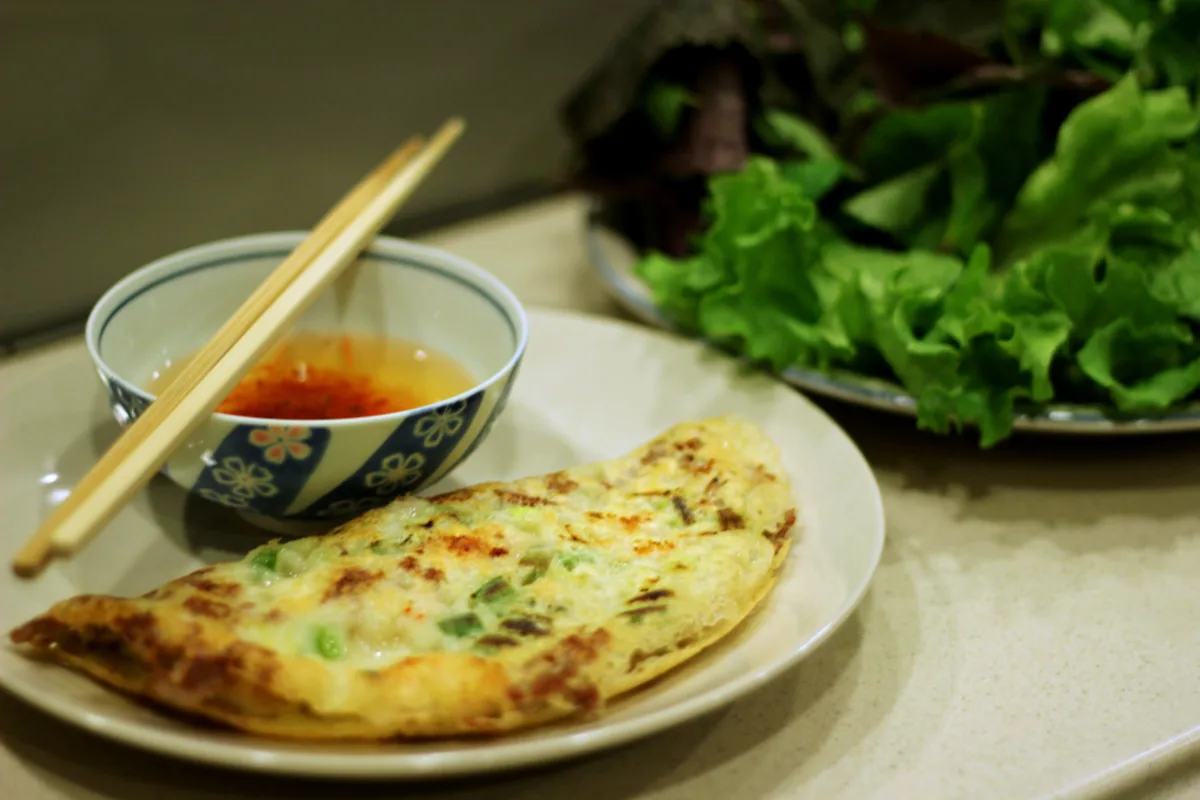
A turmeric-yellow rice flour crepe the size of a dinner plate, fried crisp with shrimp, pork and bean sprouts, then torn up and wrapped in herbs.

~$0.5–$2.5 (15,000–60,000₫) Estimate per crepe: roughly 15,000-30,000d (about US$0.60-1.20) at a roadside or market stall, and 40,000-60,000d (about US$1.60-2.40) at larger places or for premium fillings. One delta-sized crepe feeds one to two people. Prices vary by town and season.
Mi Quang: Da Nang's Turmeric Noodle Bowl, a dish from Da Nang and the surrounding central coast
Regional specialty

Mi Quang: Da Nang's Turmeric Noodle Bowl

Da Nang and the surrounding central coast

Wide turmeric-yellow rice noodles under just enough intense broth to coat them, topped with shrimp, chicken, peanuts and a shard of sesame rice cracker.

~$1–$2.5 (25,000–60,000₫) Estimate per bowl: around 25,000-40,000d (roughly US$1-1.60) at a neighborhood place, and 45,000-60,000d (roughly US$1.80-2.40) at busier spots or with premium toppings such as shrimp, ribs or frog. Prices vary.
Newsletter

Vietnam travel tips, once a week

New guides, seasonal advice and the occasional route we think is underrated — straight to your inbox.

No spam. Unsubscribe in one click.

Tiếng Việt