Viet Global TravelVietnam travel guide
Mi Quang: Da Nang's Turmeric Noodle Bowl, a dish from Da Nang and the surrounding central coast
Regional specialtyFamousCheap eats

Mi Quang: Da Nang's Turmeric Noodle Bowl

Wide turmeric-yellow rice noodles under just enough intense broth to coat them, topped with shrimp, chicken, peanuts and a shard of sesame rice cracker.

From
Da Nang and the surrounding central coast
Typical price
~$1–$2.5 (25,000–60,000₫) Estimate per bowl: around 25,000-40,000d (roughly US$1-1.60) at a neighborhood place, and 45,000-60,000d (roughly US$1.80-2.40) at busier spots or with premium toppings such as shrimp, ribs or frog. Prices vary.
Type
Central Vietnamese noodle dish

What is Mi Quang: Da Nang's Turmeric Noodle Bowl?

Mì Quảng is central Vietnam's answer to the noodle soup, except that it is barely a soup at all. The defining feature is the broth, or rather how little of it there is: instead of a bowl of liquid, you get a shallow pool of intensely concentrated stock, ladled just deep enough to reach halfway up the noodles. Everything is meant to be tossed together so the broth coats rather than submerges. The noodles themselves are wide, flat rice sheets cut into ribbons, often tinted yellow with turmeric and noticeably thicker and chewier than the ones used in beef noodle soup. On top go shrimp, chunks of free-range chicken or pork belly, quail eggs, a scatter of roasted peanuts, a fistful of raw greens including shredded banana flower, a green chili to bite, and a wedge of banh trang me, the toasted sesame rice cracker you snap over the bowl for crunch. It is the everyday dish of Da Nang and the surrounding countryside, eaten at any hour, and it tastes less like a broth than like a sauce that happens to be liquid.

Main ingredients

Wide flat rice noodles, usually tinted with turmericA small quantity of intensely concentrated brothShrimpFree-range chicken or pork bellyQuail eggsRoasted peanutsToasted sesame rice crackerRaw greens including banana flower, lettuce and herbsFresh turmericGreen chili and lime

Which neighborhood to eat in

Central Da Nang, in the older streets west of the Han River

The city's dense middle is where most of the long-running places are, generally serving chicken or shrimp-and-pork versions all day. They are easy to reach on foot or by a short ride-hailing trip from the beach hotels on the eastern side of the river, and most have picture menus or a display of toppings by the door.

Around 30,000-50,000d per bowl (roughly US$1.20-2)

Hoi An and the countryside around it

The old Quang Nam region south of Da Nang is where the dish originated, and the versions here tend to be plainer, more intensely seasoned and served with herbs grown in the market gardens outside town. Places range from Old Town storefronts to roadside stops on the way to the beach, and prices outside the tourist streets are noticeably lower.

Around 25,000-45,000d per bowl (roughly US$1-1.80)

Village markets and roadside stops along the central coast

Between the two cities and inland, small market stalls make the most rustic version: hand-cut noodles, small local shrimp, a very concentrated broth and a stack of sesame crackers on the counter. If you are traveling by car or motorbike between Da Nang, Hoi An and the mountains, these are the stops worth making.

Around 20,000-35,000d per bowl (roughly US$0.80-1.40)

What it costs

Typical price

~$1–$2.5 (25,000–60,000₫) Estimate per bowl: around 25,000-40,000d (roughly US$1-1.60) at a neighborhood place, and 45,000-60,000d (roughly US$1.80-2.40) at busier spots or with premium toppings such as shrimp, ribs or frog. Prices vary.

An estimate — the price moves with the place, the neighborhood and the hour.

How to order it

  • Toss the whole bowl thoroughly before eating. The broth is meant to coat the noodles and greens, not to be drunk, and an untossed bowl tastes dry at the top and salty at the bottom.
  • Do not ask for extra broth. The shallow pool is the defining feature of the dish, and topping it up turns it into a different and worse thing.
  • Snap the sesame rice cracker over the bowl and stir the pieces in, or use it to scoop. Either is correct; leaving it on the side is not.
  • Bite the green chili rather than slicing it in, which is the local habit and lets you control the heat mouthful by mouthful.
  • Order the chicken or shrimp-and-pork version first. Once you know the baseline, try the frog, snakehead fish or rib versions to see how the region varies it.
  • Eat it in the morning or at lunch. Many of the best places make one batch of noodles a day and close when it is gone.

Frequently asked questions

How is mi quang different from pho or bun bo Hue?
The broth quantity, above all. Pho and bun bo Hue are soups, served in a deep bowl of liquid. Mi quang gets only a shallow pool of very concentrated stock, enough to coat the noodles when you toss them. The noodles are also different: wide, thick rice ribbons usually tinted yellow with turmeric rather than thin flat sticks or round vermicelli. And it comes with roasted peanuts and a toasted sesame rice cracker, which neither of the others do.
What toppings can I get?
The common ones are shrimp with pork belly, and free-range chicken. Beyond that, regional versions use frog, snakehead fish, eel or pork ribs, and quail eggs are standard on most bowls. Whatever the protein, every version comes with roasted peanuts, a plate of raw greens and a sesame rice cracker. If you are ordering blind, the chicken version is the safest first choice.
How much does a bowl cost?
Estimate around 25,000-40,000d, roughly US$1-1.60, at a neighborhood place, and 45,000-60,000d, roughly US$1.80-2.40, at a busy spot or with premium toppings such as large shrimp, ribs or frog. Village markets can be cheaper still. Prices vary between Da Nang, Hoi An and the countryside, and rise over time, so treat these as a working range.
Why are the noodles yellow?
Fresh turmeric, which goes into both the noodle dough and the broth. It contributes color, a mild earthy aroma and part of the dish's identity, and it is one reason mi quang looks so different from other Vietnamese noodle bowls. Some places also sell an untinted white noodle version, and a few offer both so you can choose. Neither is more authentic than the other.
Is it better in Da Nang or Hoi An?
Both are good and they differ in style rather than quality. Da Nang has more choice, longer opening hours and easier access if you are staying at the beach. Hoi An and the old Quang Nam countryside, where the dish comes from, tend toward a plainer and more intensely seasoned version with local herbs. The two cities are only about 30 km apart, roughly 19 miles and half an hour by road, so trying both is simple.

You might also like

Related dishes

Com Hen: Hue's Baby Clam Rice, Explained, a dish from Hue, central Vietnam
Regional specialty

Com Hen: Hue's Baby Clam Rice, Explained

Hue, central Vietnam

Cold rice tossed with tiny river clams, pork cracklings, peanuts, crushed crackers, herbs and fiery shrimp paste, with a bowl of hot clam broth on the side.

~$0.5–$1.5 (15,000–40,000₫) Estimate per bowl: roughly 15,000-30,000d (about US$0.60-1.20) at a neighborhood stall, and up to 40,000d (about US$1.60) at a sit-down place or with extra clams. It is one of the cheapest dishes in Vietnam.
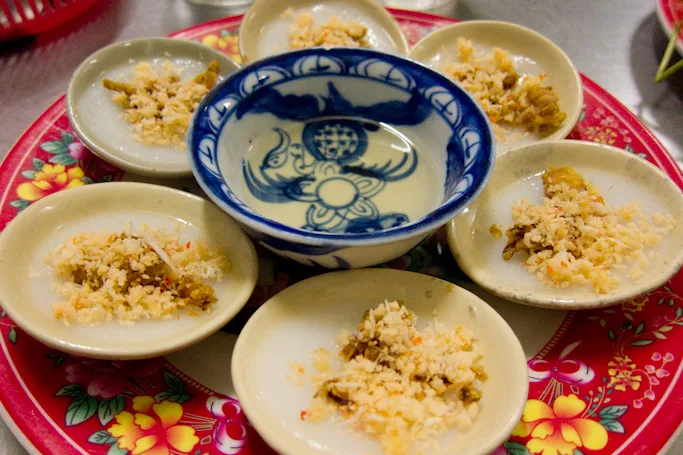
Banh Beo: Hue's Tiny Steamed Rice Cakes, a dish from Hue, central Vietnam
Regional specialty

Banh Beo: Hue's Tiny Steamed Rice Cakes

Hue, central Vietnam

Thumb-sized saucers of steamed rice batter topped with dried shrimp floss and pork cracklings, eaten a dozen at a time in Hue with sweet fish sauce.

~$1–$2 (20,000–50,000₫) Estimate for one serving, which usually means a tray or a stack of eight to fifteen small dishes. Around 20,000-50,000d, roughly US$0.80-2. Prices move with the venue and the season, so ask before you order in a tourist area.
Bun Ca Fish Noodle Soup: Hai Phong's Spicy Bowl, a dish from Hai Phong, northern Vietnam
Regional specialty

Bun Ca Fish Noodle Soup: Hai Phong's Spicy Bowl

Hai Phong, northern Vietnam

Hai Phong's signature bowl: crisp fried fish and springy fish cake in a sour, chili-red broth with rice vermicelli, eaten at any hour of the day.

~$1–$2.5 (25,000–60,000₫) Estimate per bowl: around 25,000-35,000d (roughly US$1-1.40) for a standard bowl, and 40,000-60,000d (roughly US$1.60-2.40) for a loaded bowl with extra fish cake and mackerel. Prices vary by place and time of day.
Newsletter

Vietnam travel tips, once a week

New guides, seasonal advice and the occasional route we think is underrated — straight to your inbox.

No spam. Unsubscribe in one click.

Tiếng Việt