Viet Global TravelVietnam travel guide
Bun Ca Fish Noodle Soup: Hai Phong's Spicy Bowl, a dish from Hai Phong, northern Vietnam
Regional specialtyStreet foodCheap eatsFamous

Bun Ca Fish Noodle Soup: Hai Phong's Spicy Bowl

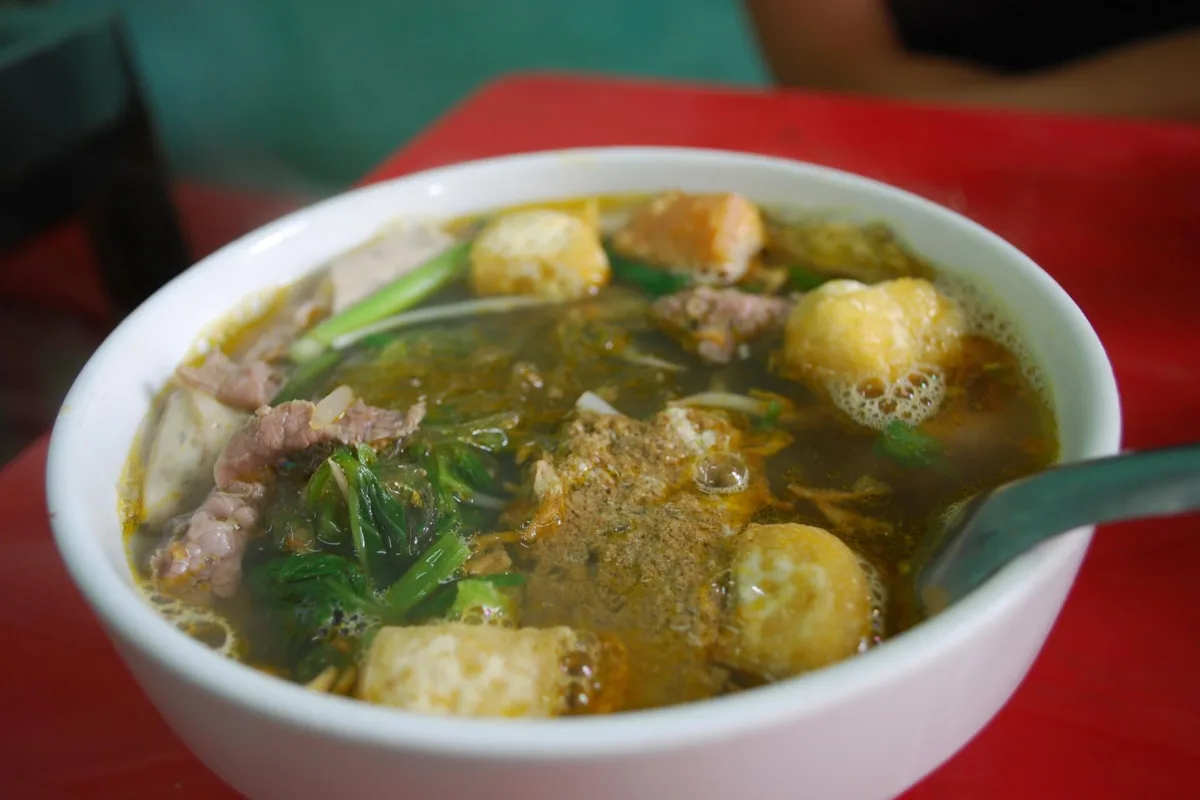
Hai Phong's signature bowl: crisp fried fish and springy fish cake in a sour, chili-red broth with rice vermicelli, eaten at any hour of the day.

From
Hai Phong, northern Vietnam
Typical price
~$1–$2.5 (25,000–60,000₫) Estimate per bowl: around 25,000-35,000d (roughly US$1-1.40) for a standard bowl, and 40,000-60,000d (roughly US$1.60-2.40) for a loaded bowl with extra fish cake and mackerel. Prices vary by place and time of day.
Type
Northern Vietnamese noodle soup

What is Bun Ca Fish Noodle Soup: Hai Phong's Spicy Bowl?

Bún cá is the bun ca fish noodle soup of northern Vietnam, and the port city of Hai Phong makes the version people travel for. The broth is the argument. It is simmered from fish bones and pork bones until it is clear and sweet, then turned sour with tomato and giam bong, the tangy lees left over after rice wine is made, and finally turned red and hot with chili oil. Into it goes a nest of thin rice vermicelli, and on top the fish: fillets of freshwater perch or mackerel, boned, marinated with turmeric and fried until the outside crackles and the inside stays soft. Most bowls also carry cha ca, a springy steamed or fried fish cake with real bite to it, plus water dropwort, shredded water spinach or the spongy stems of taro that soak up broth like a sponge. Hai Phong eats it at breakfast, at midnight and at every point in between. The local nickname, bun ca cay, means spicy fish noodles, and it is not a nickname the city applies lightly.

Main ingredients

Freshwater perch or fresh mackerel, boned and friedFish cake, steamed or fried, sliced into the bowlThin fresh rice vermicelliA broth of fish bones and pork bonesTomatoGiam bong, the sour lees left from making rice wineChili oil and sate pasteFresh turmericWater dropwort, shredded water spinach and taro stemDill and scallionFried dough sticks on the side

Which neighborhood to eat in

The old commercial streets of central Hai Phong, around Cau Dat and Cho Con market

This is the core of the city's noodle culture, and the long-running family places here are where locals go. Many are small storefronts with the frying pan facing the street. Go in the morning for the freshest fish and the sweetest broth. Nothing here is set up for tourists, which is the point.

Around 25,000-40,000d per bowl (roughly US$1-1.60)

The night eating streets near the Opera House and the central markets

After dark the same dish reappears with a wider spread of add-ons: extra fried mackerel, special fish cake and hot quay, the fried dough sticks you tear up and dip into the broth. Prices are a little higher and the atmosphere is louder, closer to a night market than a breakfast counter.

Around 35,000-60,000d per bowl (roughly US$1.40-2.40)

Neighborhood alleys and the streets around the bus and train stations

The cheapest and most local option. These are one-woman operations under an awning with a few stools, frying fish to order and ladling from a pot that has been going since dawn. Portions are smaller, the seating is basic and the broth is often the most traditionally sour and hot of the three options.

Around 25,000-35,000d per bowl (roughly US$1-1.40)

What it costs

Typical price

~$1–$2.5 (25,000–60,000₫) Estimate per bowl: around 25,000-35,000d (roughly US$1-1.40) for a standard bowl, and 40,000-60,000d (roughly US$1.60-2.40) for a loaded bowl with extra fish cake and mackerel. Prices vary by place and time of day.

An estimate — the price moves with the place, the neighborhood and the hour.

How to order it

  • Eat it the moment it arrives. The fried fish loses its crackle within a few minutes in hot broth, and that contrast is the reason to order this rather than any other noodle soup.
  • Order the version with both fried fish and fish cake if the choice is offered. The two textures do different jobs and a bowl with only one feels thin by comparison.
  • Hai Phong seasons hot by Vietnamese standards, let alone by British or American ones. Ask for the chili on the side if you are unsure, and add it yourself.
  • A squeeze of lime and a spoon of the sour lees on the table will sharpen a broth that tastes flat. Add a little at a time and taste as you go.
  • Order a portion of quay, the fried dough sticks, and tear them into the broth. On a cold, damp northern morning this is what makes the meal.
  • Early morning has the freshest fish. Very late in the day, the fish has often been fried in advance and reheated, which is exactly the version you do not want.

Frequently asked questions

What makes bun ca fish noodle soup in Hai Phong different from elsewhere?
The sourness and the heat. Other cities serve fish noodle soup in a clear, gentle broth. Hai Phong builds its broth on tomato and giam bong, the sour lees left over from rice wine making, then adds chili oil and sate paste until the surface runs red. Locals call it bun ca cay, spicy fish noodles, and the springy local fish cake made from mackerel is the other signature. The result tastes sharper and more aggressive than the northern norm.
How much does a bowl cost?
Estimate around 25,000-35,000d, roughly US$1-1.40, for a standard bowl, and 40,000-60,000d, roughly US$1.60-2.40, for a loaded bowl with extra fried mackerel and fish cake. Add another 10,000-15,000d for a plate of fried dough sticks. These are estimates and they vary by street and by year, so check before ordering if the place has no visible prices.
How do I get to Hai Phong from Hanoi?
It is roughly 100 km (about 62 miles) east of Hanoi. The expressway makes it about two hours by limousine van or coach, and services run through the day from several points in Hanoi. There is also a slow, cheap train from Long Bien and Hanoi stations that takes roughly two and a half hours and is more interesting than it is fast. Many travelers also pass through Hai Phong on the way to Cat Ba, which makes it an easy stop rather than a special trip.
What vegetables come with it?
Usually water dropwort, shredded water spinach stems, and the spongy stems of taro, which look odd and act like a sponge for the broth. Dill and scallion go in at the end, and a plate of raw herbs often comes on the side. Many places will also offer fried dough sticks to dip. If you dislike a particular vegetable, it is easy enough to leave it, since everything is added on top rather than cooked in.
When is the best time of day to eat it?
Hai Phong eats this dish around the clock, but the two good windows are early morning, when the fish is freshest and the broth has just been made, and late evening, when the night streets fill up and the bowls come loaded with extras. The dead middle of the afternoon is the one time to be cautious, because that is when fish fried hours earlier tends to get served.

You might also like

Related dishes

Bun Rieu: Hanoi's Crab and Tomato Noodle Soup, a dish from Hanoi, northern Vietnam
Regional specialty

Bun Rieu: Hanoi's Crab and Tomato Noodle Soup

Hanoi, northern Vietnam

A tart, tomato-red noodle soup built on freshwater paddy crab, with clouds of crab curd, fried tofu and a basket of raw herbs. Hanoi's classic morning bowl.

~$1–$3 (30,000–70,000₫) Estimate per bowl: around 30,000-50,000d (roughly US$1.20-2) for a standard bowl, rising to about 50,000-70,000d (roughly US$2-2.80) when you add pork rolls, ribs or beef. Prices vary by neighborhood.
Cha Ca La Vong: Hanoi's Turmeric Fish Dish, a dish from Hanoi, northern Vietnam
Regional specialty

Cha Ca La Vong: Hanoi's Turmeric Fish Dish

Hanoi, northern Vietnam

Turmeric-marinated fish grilled, then finished in a pan of hot fat at your table with a bale of dill, eaten over rice noodles with peanuts and shrimp paste.

~$4.5–$10 (120,000–250,000₫) Estimate per person, including noodles and herbs: roughly 120,000-180,000d (about US$5-7) outside the center, and 150,000-250,000d (about US$6-10) at the well-known Old Quarter places. Prices vary and premium fish costs more.
Mi Quang: Da Nang's Turmeric Noodle Bowl, a dish from Da Nang and the surrounding central coast
Regional specialty

Mi Quang: Da Nang's Turmeric Noodle Bowl

Da Nang and the surrounding central coast

Wide turmeric-yellow rice noodles under just enough intense broth to coat them, topped with shrimp, chicken, peanuts and a shard of sesame rice cracker.

~$1–$2.5 (25,000–60,000₫) Estimate per bowl: around 25,000-40,000d (roughly US$1-1.60) at a neighborhood place, and 45,000-60,000d (roughly US$1.80-2.40) at busier spots or with premium toppings such as shrimp, ribs or frog. Prices vary.
Newsletter

Vietnam travel tips, once a week

New guides, seasonal advice and the occasional route we think is underrated — straight to your inbox.

No spam. Unsubscribe in one click.

Tiếng Việt