Viet Global TravelVietnam travel guide
Bun Rieu: Hanoi's Crab and Tomato Noodle Soup, a dish from Hanoi, northern Vietnam
Regional specialtyStreet foodCheap eatsFamous

Bun Rieu: Hanoi's Crab and Tomato Noodle Soup

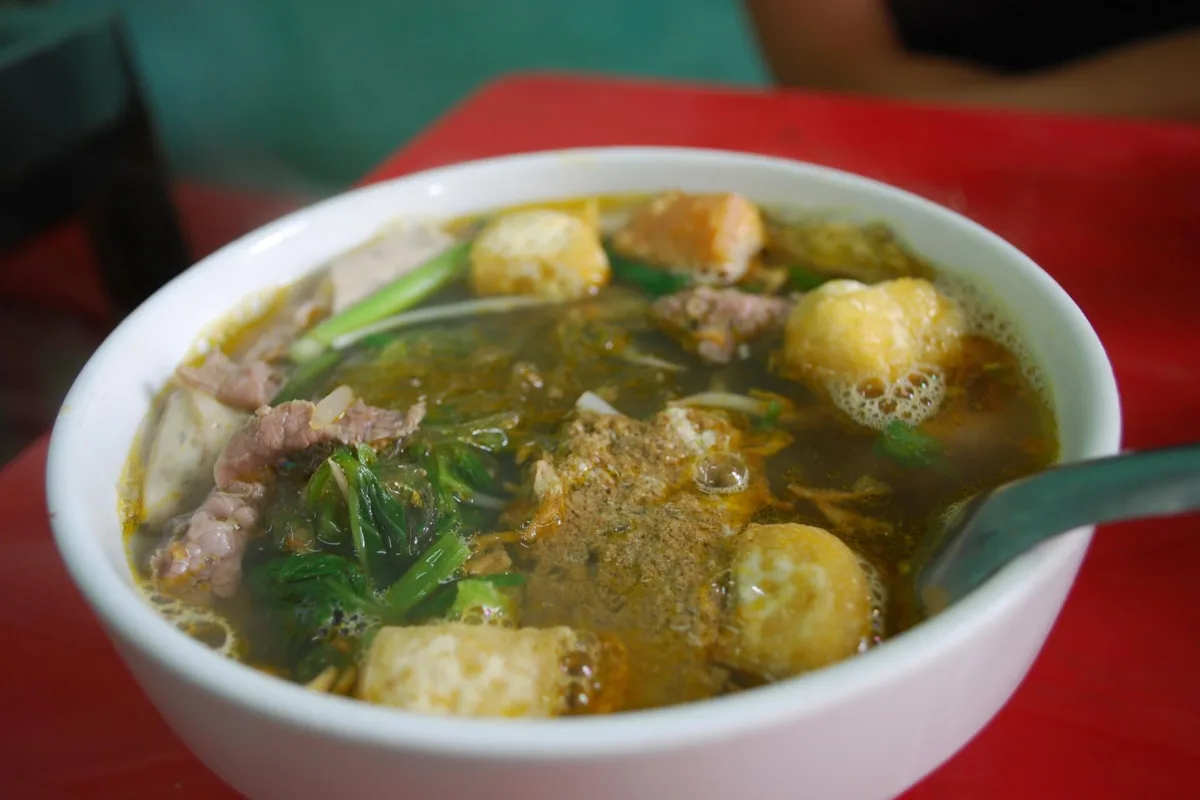
A tart, tomato-red noodle soup built on freshwater paddy crab, with clouds of crab curd, fried tofu and a basket of raw herbs. Hanoi's classic morning bowl.

From
Hanoi, northern Vietnam
Typical price
~$1–$3 (30,000–70,000₫) Estimate per bowl: around 30,000-50,000d (roughly US$1.20-2) for a standard bowl, rising to about 50,000-70,000d (roughly US$2-2.80) when you add pork rolls, ribs or beef. Prices vary by neighborhood.
Type
Northern Vietnamese noodle soup

What is Bun Rieu: Hanoi's Crab and Tomato Noodle Soup?

Bún riêu is the crab and tomato noodle soup that northern Vietnam eats for breakfast, and Hanoi makes the version that set the standard. The base is cua dong, the small freshwater crabs that live in flooded rice paddies. They are pounded whole, shell and all, then strained, and the liquid is heated gently until the protein sets into soft, savory clouds that float on the surface. That is the rieu, and it is the reason for the dish. Around it goes a broth reddened with tomato and soured with giam bong, the lees left after rice wine is made, which gives a rounded, faintly fermented acidity rather than the sharp bite of vinegar. Into the bowl go fresh rice vermicelli, cubes of fried tofu, fried shallot and a small measure of mam tom, the pungent fermented shrimp paste that gives northern cooking its depth. It is served with a plate of raw herbs: split water spinach stems, shredded banana flower, lemon balm and perilla. The whole thing costs the price of a coffee and takes about a minute to arrive.

Main ingredients

Freshwater paddy crab, pounded whole and strainedRipe tomatoFried tofu cubesGiam bong, the sour lees left from making rice wineFermented shrimp pasteFresh rice vermicelliFried shallotRaw herbs: split water spinach, banana flower, lemon balm, perillaChili oil

Which neighborhood to eat in

The Old Quarter lanes around Hoan Kiem Lake

The small stalls tucked into the lanes north of the lake, particularly around the silversmith and metalwork streets, serve the traditional version: sour broth, a proper raft of crab curd, minimal extras. Many sell out by late morning and shut. This is the easiest option if you are staying in the center, since almost everything here is a short walk from an Old Quarter hotel.

Around 30,000-45,000d per bowl (roughly US$1.20-1.80)

Around the covered markets and older residential districts south of the lake

Market-adjacent places serve fuller bowls, often with pork rolls, cartilage ribs or beef added on top of the crab. The setting is plain, the portions are larger and the prices are still low. Useful if you want a genuine meal rather than a snack, and they tend to stay open later than the Old Quarter stalls.

Around 35,000-55,000d per bowl (roughly US$1.40-2.20)

Dedicated noodle shops scattered across the inner city

Larger sit-down places that open all day, with printed menus, proper tables and clearer hygiene. The broth is often slightly milder and sweeter than the lane version, and the toppings menu is longer. A reasonable choice for a first try, or on a day when you do not want to sit on a plastic stool in the rain.

Around 45,000-70,000d per bowl (roughly US$1.80-2.80)

What it costs

Typical price

~$1–$3 (30,000–70,000₫) Estimate per bowl: around 30,000-50,000d (roughly US$1.20-2) for a standard bowl, rising to about 50,000-70,000d (roughly US$2-2.80) when you add pork rolls, ribs or beef. Prices vary by neighborhood.

An estimate — the price moves with the place, the neighborhood and the hour.

How to order it

  • Go in the morning. The crab is pounded fresh each day and the best stalls sell out by midday, after which what remains has been sitting.
  • For the Hanoi flavor, add a small spoon of fermented shrimp paste and a little chili oil and stir gently. It smells far stronger than it tastes once it is in the broth.
  • Squeeze in a calamansi lime, or ask for extra sour lees, if you want more acidity. Add a little at a time, because it is easy to overdo and hard to undo.
  • Use the herb plate generously, especially the banana flower and lemon balm. The raw, slightly bitter greens are what balance the richness of the crab curd and the fried tofu.
  • The crab curd is fragile. Lift it with a spoon rather than chopsticks or it will break apart in the broth.
  • If your stomach is cautious about street food, choose a busy stall with high turnover rather than a quiet one, because freshness here is a matter of hours, not days.

Frequently asked questions

What is the soft orange stuff floating on top of bun rieu?
That is the rieu itself: paddy crab that has been pounded shell and all, strained, and then heated slowly so the protein coagulates into a light, savory curd. It has a texture somewhere between soft scrambled egg and a very tender dumpling, and it carries a clean shellfish flavor rather than a strong fishy one. Some places top the bowl with additional crab roe for color. It is the single component that separates a good bowl from a bad one.
How is Hanoi's bun rieu different from the southern version?
Hanoi's is leaner and more sour. It sticks close to crab curd, tomato, fried tofu and a little fermented shrimp paste, and its acidity comes from rice wine lees. Southern versions tend to be sweeter and much more loaded, with pork blood cubes, pig trotter, snails or pork rolls, and they come with a bigger and different herb plate. Neither is wrong; they are regional dialects of the same dish.
How much does a bowl of bun rieu cost in Hanoi?
Estimate around 30,000-50,000d, roughly US$1.20-2, for a standard bowl. Adding pork rolls, cartilage ribs or beef pushes it to about 50,000-70,000d, roughly US$2-2.80. Lane stalls sit at the bottom of the range and sit-down noodle shops at the top. Prices vary by neighborhood and rise over time, so treat these as estimates.
What is giam bong, and can I taste it?
Giam bong is the fermented rice mash left over after rice wine is made. It is used across northern Vietnam as a souring agent, and it gives a rounded, gently fermented acidity with a faint sweetness underneath, quite unlike the flat sharpness of distilled vinegar. You can taste it clearly if you compare a proper bowl with a shortcut one made with vinegar and a little sugar. It is the flavor most people fail to place and then miss afterward.
Is there a vegetarian version?
The standard bowl uses crab, fermented shrimp paste and often a pork-based stock, so it is not vegetarian as served. Meat-free versions built on tomato, fried tofu and mushrooms do exist, especially at Buddhist vegetarian restaurants, of which Hanoi has a decent number, and they are more common around the first and fifteenth days of the lunar month. Ask directly, since a stall may say yes while still using shrimp paste.

You might also like

Related dishes

Cha Ca La Vong: Hanoi's Turmeric Fish Dish, a dish from Hanoi, northern Vietnam
Regional specialty

Cha Ca La Vong: Hanoi's Turmeric Fish Dish

Hanoi, northern Vietnam

Turmeric-marinated fish grilled, then finished in a pan of hot fat at your table with a bale of dill, eaten over rice noodles with peanuts and shrimp paste.

~$4.5–$10 (120,000–250,000₫) Estimate per person, including noodles and herbs: roughly 120,000-180,000d (about US$5-7) outside the center, and 150,000-250,000d (about US$6-10) at the well-known Old Quarter places. Prices vary and premium fish costs more.
Bun Ca Fish Noodle Soup: Hai Phong's Spicy Bowl, a dish from Hai Phong, northern Vietnam
Regional specialty

Bun Ca Fish Noodle Soup: Hai Phong's Spicy Bowl

Hai Phong, northern Vietnam

Hai Phong's signature bowl: crisp fried fish and springy fish cake in a sour, chili-red broth with rice vermicelli, eaten at any hour of the day.

~$1–$2.5 (25,000–60,000₫) Estimate per bowl: around 25,000-35,000d (roughly US$1-1.40) for a standard bowl, and 40,000-60,000d (roughly US$1.60-2.40) for a loaded bowl with extra fish cake and mackerel. Prices vary by place and time of day.
Com Hen: Hue's Baby Clam Rice, Explained, a dish from Hue, central Vietnam
Regional specialty

Com Hen: Hue's Baby Clam Rice, Explained

Hue, central Vietnam

Cold rice tossed with tiny river clams, pork cracklings, peanuts, crushed crackers, herbs and fiery shrimp paste, with a bowl of hot clam broth on the side.

~$0.5–$1.5 (15,000–40,000₫) Estimate per bowl: roughly 15,000-30,000d (about US$0.60-1.20) at a neighborhood stall, and up to 40,000d (about US$1.60) at a sit-down place or with extra clams. It is one of the cheapest dishes in Vietnam.
Newsletter

Vietnam travel tips, once a week

New guides, seasonal advice and the occasional route we think is underrated — straight to your inbox.

No spam. Unsubscribe in one click.

Tiếng Việt