Viet Global TravelVietnam travel guide
Cha Ca La Vong: Hanoi's Turmeric Fish Dish, a dish from Hanoi, northern Vietnam
Regional specialtyRestaurantFamous

Cha Ca La Vong: Hanoi's Turmeric Fish Dish

Turmeric-marinated fish grilled, then finished in a pan of hot fat at your table with a bale of dill, eaten over rice noodles with peanuts and shrimp paste.

From
Hanoi, northern Vietnam
Typical price
~$4.5–$10 (120,000–250,000₫) Estimate per person, including noodles and herbs: roughly 120,000-180,000d (about US$5-7) outside the center, and 150,000-250,000d (about US$6-10) at the well-known Old Quarter places. Prices vary and premium fish costs more.
Type
Northern Vietnamese table-cooked fish

What is Cha Ca La Vong: Hanoi's Turmeric Fish Dish?

Chả cá Lã Vọng is the rare Hanoi dish that is also a piece of theater. Firm white river fish, traditionally catfish, is cut into thick pieces and marinated in fresh turmeric, galangal and fermented rice, which turns it a deep yellow and gives it a faintly sour edge. It is grilled over charcoal until just set, then brought to your table in a pan of hot fat set over a burner, where it finishes cooking in front of you. At that point a startling quantity of dill and scallion goes in, wilts in seconds, and the smell fills the room. You assemble each mouthful yourself: a nest of cool rice vermicelli in your bowl, a piece of hot fish and a tangle of dill on top, roasted peanuts scattered over, fresh herbs, and a spoonful of mam tom, the fermented shrimp paste whipped with lime and sugar until it foams. It is more expensive than most Vietnamese street food and worth it, and unlike almost everything else in Hanoi, it is a sit-down meal with a rhythm of its own.

Main ingredients

Firm white river fish, traditionally catfishFresh turmeric and galangalFermented rice, used as a souring marinadeFermented shrimp pasteA large quantity of dillScallion, cut into lengthsFresh rice vermicelliRoasted peanutsHerbs, usually Vietnamese balm and corianderCalamansi lime and fresh chiliRendered pork fat or cooking oil

Which neighborhood to eat in

Cha Ca street and the surrounding Old Quarter lanes

A street in the Old Quarter is literally named after the dish, and this is where the tradition began well over a century ago. Expect old wooden interiors, a pan brought straight to the table and staff who will assemble the first bowl for you. Prices here are the highest in the city because of the location and the names, and reservations help on weekend evenings.

Around 150,000-250,000d per person (roughly US$6-10)

The streets between the Old Quarter and the western edge of the center

A short walk or a five-minute ride from the tourist core, this band of streets has places that Hanoians themselves use. The rooms are plainer, the portions tend to be more generous and the cooking follows the same turmeric, galangal and dill formula. A better value proposition if you care more about the food than the setting.

Around 120,000-180,000d per person (roughly US$5-7)

The newer districts west of the historic center

Further out, where the city has expanded, there are larger places set up for family groups rather than tourists. Portions are bigger, prices lower, and the pan usually arrives already sizzling. Worth the ten or fifteen minute ride if you are staying outside the Old Quarter or want to eat somewhere with room to breathe.

Around 100,000-160,000d per person (roughly US$4-6.50)

What it costs

Typical price

~$4.5–$10 (120,000–250,000₫) Estimate per person, including noodles and herbs: roughly 120,000-180,000d (about US$5-7) outside the center, and 150,000-250,000d (about US$6-10) at the well-known Old Quarter places. Prices vary and premium fish costs more.

An estimate — the price moves with the place, the neighborhood and the hour.

How to order it

  • Eat straight from the pan while the fat is still bubbling. The fish stiffens and turns dull as it cools, and reheating it is not the same.
  • Go as a group of two to four. Most places sell by the pan rather than by the plate, and a shared pan is both better value and more fun than a solo portion.
  • The fermented shrimp paste is the traditional partner: add sugar, a squeeze of lime and chili, then beat it with chopsticks until it foams pale pink. Try it before ruling it out, and ask for sweet fish sauce instead if you would rather not.
  • Take far more dill than looks sensible. It is a component of the dish, not a garnish, and the fish tastes flat without it.
  • Keep the peanuts for the end of each mouthful rather than stirring them through the noodles, so they stay crisp.
  • Weekend evenings fill up at the famous places. Go early, book ahead, or eat at lunch when it is much quieter.

Frequently asked questions

What fish is cha ca la vong made with?
Traditionally catfish, a firm-fleshed river fish with few small bones that holds its shape through grilling and then frying. Some places substitute snakehead, other catfish species or farmed white fish, which is cheaper and less flavorful. The fish should arrive in thick pieces that stay intact in the pan rather than flaking apart, which is a reasonable quality test at the table.
Where does the name come from?
The dish is generally traced to a Hanoi family who sold it from a house on what is now Cha Ca street more than a century ago. Their dining room is said to have held a statue of a legendary Chinese sage shown fishing, known in Vietnamese as La Vong, and customers took to naming the dish after the statue. The street kept the name of the dish, and the dish kept the name of the statue.
How does the meal actually work?
A burner is set on your table with a pan of the marinated, part-grilled fish in hot fat. Handfuls of dill and scallion go in and wilt in under a minute. You then build each mouthful in your own bowl: noodles first, then fish and greens, then peanuts, herbs and a spoon of sauce. Staff will usually demonstrate the first round. It is meant to be eaten in installments over twenty minutes or so, not assembled all at once.
How much does cha ca la vong cost?
Estimate around 120,000-200,000d per person, roughly US$5-8, including the noodles and herbs. The well-known Old Quarter places run higher, in the region of 150,000-250,000d, roughly US$6-10. That makes it several times the price of a bowl of street noodles, so treat it as a proper meal out. Prices vary by venue and change over time.
When is the best time to eat it?
Lunch or dinner rather than breakfast, and it is at its best on a cold, damp Hanoi day between roughly November and March, when sitting over a hot pan is part of the appeal. Evenings are busiest, especially at weekends, so if you dislike waiting, go at lunch or arrive early. It also travels badly, so it is not a dish to order as takeout.

You might also like

Related dishes

Bun Rieu: Hanoi's Crab and Tomato Noodle Soup, a dish from Hanoi, northern Vietnam
Regional specialty

Bun Rieu: Hanoi's Crab and Tomato Noodle Soup

Hanoi, northern Vietnam

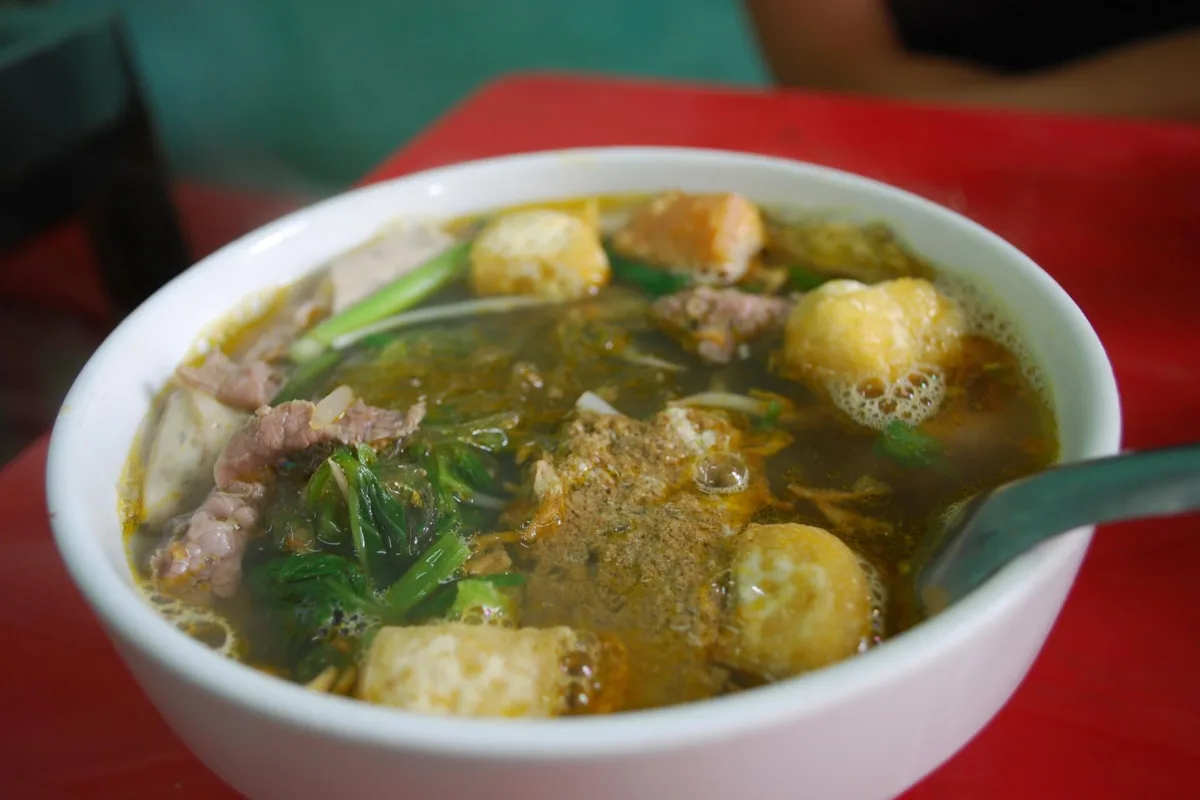
A tart, tomato-red noodle soup built on freshwater paddy crab, with clouds of crab curd, fried tofu and a basket of raw herbs. Hanoi's classic morning bowl.

~$1–$3 (30,000–70,000₫) Estimate per bowl: around 30,000-50,000d (roughly US$1.20-2) for a standard bowl, rising to about 50,000-70,000d (roughly US$2-2.80) when you add pork rolls, ribs or beef. Prices vary by neighborhood.
Bun Ca Fish Noodle Soup: Hai Phong's Spicy Bowl, a dish from Hai Phong, northern Vietnam
Regional specialty

Bun Ca Fish Noodle Soup: Hai Phong's Spicy Bowl

Hai Phong, northern Vietnam

Hai Phong's signature bowl: crisp fried fish and springy fish cake in a sour, chili-red broth with rice vermicelli, eaten at any hour of the day.

~$1–$2.5 (25,000–60,000₫) Estimate per bowl: around 25,000-35,000d (roughly US$1-1.40) for a standard bowl, and 40,000-60,000d (roughly US$1.60-2.40) for a loaded bowl with extra fish cake and mackerel. Prices vary by place and time of day.
Banh Beo: Hue's Tiny Steamed Rice Cakes, a dish from Hue, central Vietnam
Regional specialty

Banh Beo: Hue's Tiny Steamed Rice Cakes

Hue, central Vietnam

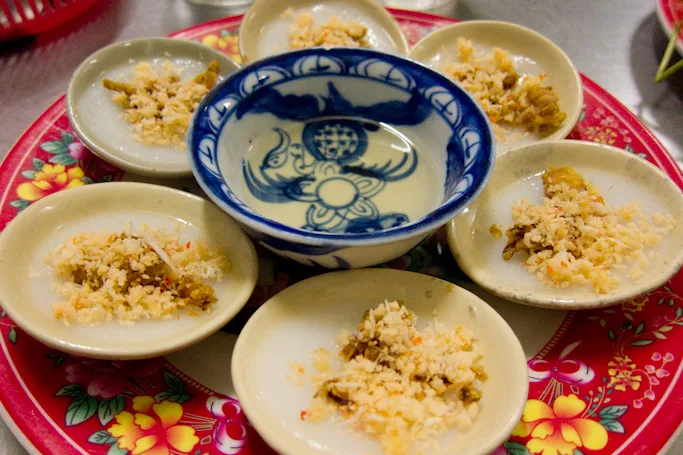
Thumb-sized saucers of steamed rice batter topped with dried shrimp floss and pork cracklings, eaten a dozen at a time in Hue with sweet fish sauce.

~$1–$2 (20,000–50,000₫) Estimate for one serving, which usually means a tray or a stack of eight to fifteen small dishes. Around 20,000-50,000d, roughly US$0.80-2. Prices move with the venue and the season, so ask before you order in a tourist area.
Newsletter

Vietnam travel tips, once a week

New guides, seasonal advice and the occasional route we think is underrated — straight to your inbox.

No spam. Unsubscribe in one click.

Tiếng Việt