Viet Global TravelVietnam travel guide
Com Hen: Hue's Baby Clam Rice, Explained, a dish from Hue, central Vietnam
Regional specialtyCheap eatsStreet food

Com Hen: Hue's Baby Clam Rice, Explained

Cold rice tossed with tiny river clams, pork cracklings, peanuts, crushed crackers, herbs and fiery shrimp paste, with a bowl of hot clam broth on the side.

From
Hue, central Vietnam
Typical price
~$0.5–$1.5 (15,000–40,000₫) Estimate per bowl: roughly 15,000-30,000d (about US$0.60-1.20) at a neighborhood stall, and up to 40,000d (about US$1.60) at a sit-down place or with extra clams. It is one of the cheapest dishes in Vietnam.
Type
Central Vietnamese mixed rice dish

What is Com Hen: Hue's Baby Clam Rice, Explained?

Cơm hến is the most argued-about dish in Hue and the cheapest great thing in central Vietnam. It is a bowl of cold, cooked rice, and the coldness is deliberate, not an accident of service. Over it goes a small mound of hen, the thumbnail-sized freshwater clams harvested from the sandbars of the Perfume River, stir-fried until they are dry and fragrant. Then everything else: crisp pork cracklings, roasted peanuts, sesame seeds, crumbled rice crackers, sour star fruit, shredded banana flower, a fistful of herbs, and a spoonful of mam ruoc, the thick fermented shrimp paste that gives Hue cooking its backbone, plus as much chili as you can stand. A separate bowl of the clear, sweet water the clams were cooked in comes alongside, to sip or to pour in. You mix it all yourself, hard, until nothing is identifiable. What you get is salty, nutty, sour, crunchy and extremely hot, all at once, for the price of a bottle of water. It was invented by the poor as a way of using leftover rice, and Hue has never seen a reason to make it fancier.

Main ingredients

Cold cooked riceTiny freshwater clams, stir-friedThe clear broth the clams were cooked inCrisp pork cracklingsRoasted peanuts and sesame seedsCrumbled toasted rice crackersSour star fruit and shredded banana flowerHerbs and shredded raw vegetablesFermented shrimp pasteA great deal of chili

Which neighborhood to eat in

Con Hen, the sandbar island in the Perfume River

The islet the dish is named after, a short ride from the center across a bridge, is where the clams were traditionally gathered and where the most traditional versions are still made. The stalls are small, plain and family-run, and the seasoning is at full local strength. This is the version to eat if you want the dish as Hue means it.

Around 15,000-30,000d per bowl (roughly US$0.60-1.20)

Neighborhood stalls across the city, on both banks

Com hen is everywhere in Hue, from carts parked on residential corners to front-room stalls with four stools. Most sell only in the morning and again in the late afternoon. Look for a vendor with a spread of a dozen small containers of toppings, which is the visual signature of a place that mixes to order.

Around 20,000-40,000d per bowl (roughly US$0.80-1.60)

Sit-down places near the Citadel and the backpacker streets on the south bank

Slightly more comfortable, with tables, menus and often milder seasoning aimed at people who are not from Hue. Convenient if you are combining it with sightseeing, though the trade-off is usually less chili and less shrimp paste than a local stall would use.

Around 25,000-40,000d per bowl (roughly US$1-1.60)

What it costs

Typical price

~$0.5–$1.5 (15,000–40,000₫) Estimate per bowl: roughly 15,000-30,000d (about US$0.60-1.20) at a neighborhood stall, and up to 40,000d (about US$1.60) at a sit-down place or with extra clams. It is one of the cheapest dishes in Vietnam.

An estimate — the price moves with the place, the neighborhood and the hour.

How to order it

  • Say how much chili you want before it is mixed. The standard Hue seasoning is genuinely fierce, and once the shrimp paste and chili are in, there is no removing them.
  • Mix the whole bowl thoroughly before the first mouthful. Eating it in layers gives you a spoon of plain rice, then a spoon of pure chili, and misses the point entirely.
  • Sip the hot clam broth between mouthfuls, or pour it in if the mix feels too dry. It is clean and lightly sweet and it resets your palate.
  • If cold rice is unappealing, ask for bun hen, the same toppings over rice vermicelli, or chao hen, a warm clam rice porridge. Most vendors make all three.
  • Eat it in the morning or the late afternoon, which are the two selling windows. Midday is when many stalls are closed.
  • The fermented shrimp paste is not optional in the traditional version, but you can ask for less. It smells much stronger than it tastes once it is mixed through.

Frequently asked questions

Why is the rice cold?
Because the dish began as a way to use leftover rice, and Hue kept it that way once it became clear the temperature contrast was part of the appeal. The rice is at room temperature, not refrigerated. Against the warm stir-fried clams, the hot broth on the side and the room-temperature crunch of peanuts and crackers, the cool neutral rice gives everything else something to work against. It is not a chilled dish and it is not a leftovers dish anymore, but the texture is deliberate.
How spicy is com hen really?
Hotter than most visitors expect, and hotter than nearly anything else served in Vietnam to tourists. Hue eats chili at a level that surprises people who have already spent two weeks in the country. The heat comes from both fresh chili and chili-laced fermented shrimp paste, so it builds rather than spiking. Ask for less before it is mixed, taste, and add more from the pot on the table if you want it.
How much does com hen cost?
Estimate around 15,000-30,000d, roughly US$0.60-1.20, at a neighborhood stall, and up to about 40,000d, roughly US$1.60, at a sit-down place or with an extra portion of clams. It is one of the least expensive proper dishes in Vietnam and was designed to be, so a price far above that range in a tourist street is worth questioning.
What are the clams, and are they safe?
They are hen, tiny freshwater clams roughly the size of a thumbnail, traditionally gathered from the sandbars of the Perfume River. They are thoroughly cooked, and the broth served alongside is the water they were boiled in. As with any shellfish anywhere, choose a busy vendor with high turnover, particularly in hot weather. People with shellfish allergies should avoid the dish entirely, since clams are the entire basis of it.
Is there a version without pork or shrimp paste?
Hue has an unusually deep Buddhist vegetarian tradition, and vegetarian versions of the dish exist, generally replacing clams with mushroom or tofu and the shrimp paste with a soy-based seasoning. They are easiest to find at dedicated vegetarian places and around the first and fifteenth days of the lunar month. At a standard stall, the pork cracklings can be left out on request, but the shrimp paste usually cannot.

You might also like

Related dishes

Banh Beo: Hue's Tiny Steamed Rice Cakes, a dish from Hue, central Vietnam
Regional specialty

Banh Beo: Hue's Tiny Steamed Rice Cakes

Hue, central Vietnam

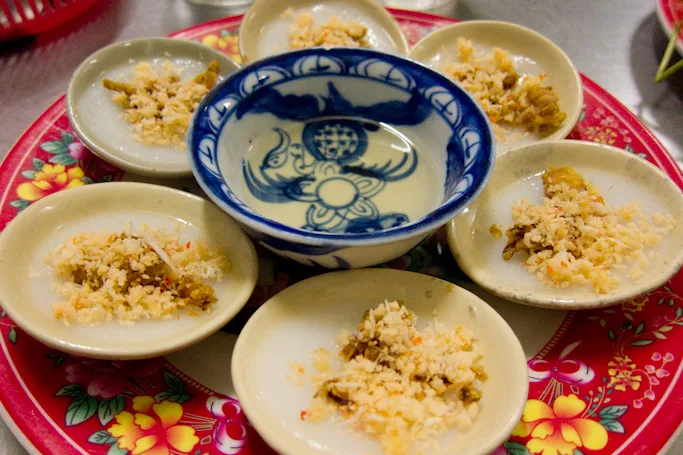
Thumb-sized saucers of steamed rice batter topped with dried shrimp floss and pork cracklings, eaten a dozen at a time in Hue with sweet fish sauce.

~$1–$2 (20,000–50,000₫) Estimate for one serving, which usually means a tray or a stack of eight to fifteen small dishes. Around 20,000-50,000d, roughly US$0.80-2. Prices move with the venue and the season, so ask before you order in a tourist area.
Mi Quang: Da Nang's Turmeric Noodle Bowl, a dish from Da Nang and the surrounding central coast
Regional specialty

Mi Quang: Da Nang's Turmeric Noodle Bowl

Da Nang and the surrounding central coast

Wide turmeric-yellow rice noodles under just enough intense broth to coat them, topped with shrimp, chicken, peanuts and a shard of sesame rice cracker.

~$1–$2.5 (25,000–60,000₫) Estimate per bowl: around 25,000-40,000d (roughly US$1-1.60) at a neighborhood place, and 45,000-60,000d (roughly US$1.80-2.40) at busier spots or with premium toppings such as shrimp, ribs or frog. Prices vary.
Bun Rieu: Hanoi's Crab and Tomato Noodle Soup, a dish from Hanoi, northern Vietnam
Regional specialty

Bun Rieu: Hanoi's Crab and Tomato Noodle Soup

Hanoi, northern Vietnam

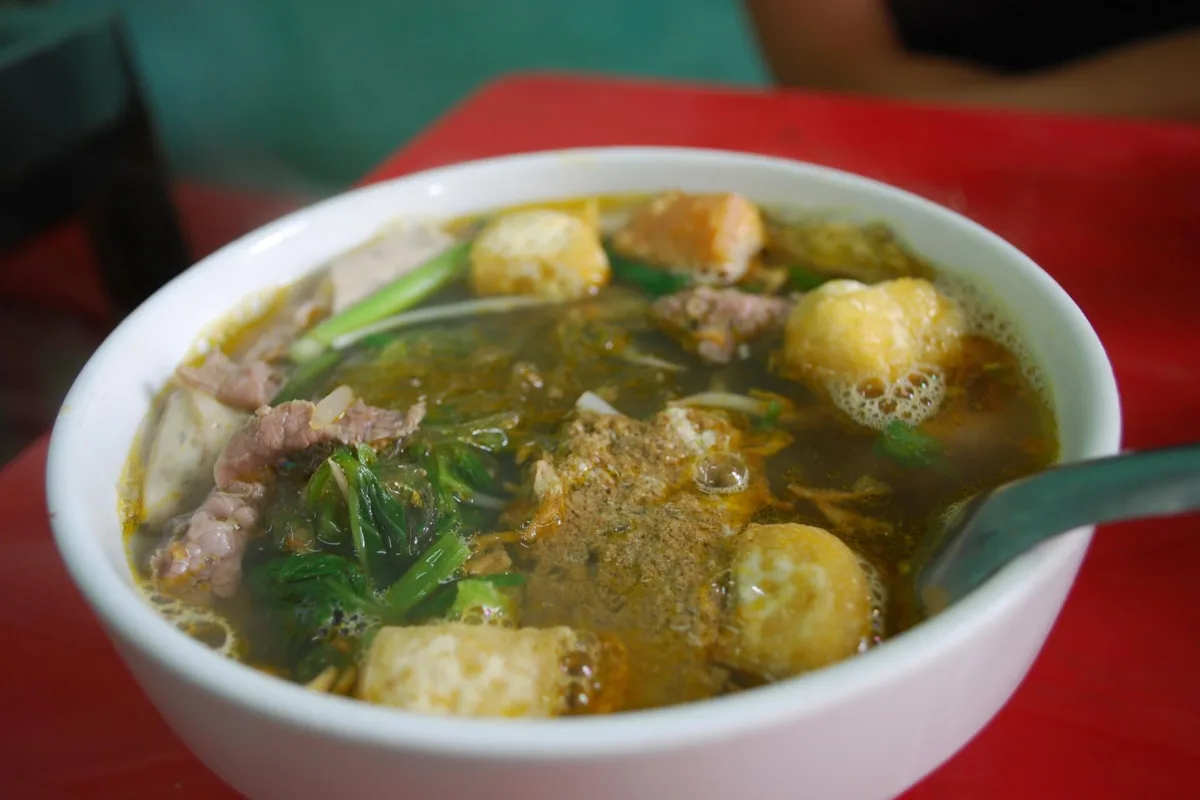
A tart, tomato-red noodle soup built on freshwater paddy crab, with clouds of crab curd, fried tofu and a basket of raw herbs. Hanoi's classic morning bowl.

~$1–$3 (30,000–70,000₫) Estimate per bowl: around 30,000-50,000d (roughly US$1.20-2) for a standard bowl, rising to about 50,000-70,000d (roughly US$2-2.80) when you add pork rolls, ribs or beef. Prices vary by neighborhood.
Newsletter

Vietnam travel tips, once a week

New guides, seasonal advice and the occasional route we think is underrated — straight to your inbox.

No spam. Unsubscribe in one click.

Tiếng Việt