Viet Global TravelVietnam travel guide
Hu Tieu: Saigon's Other Great Noodle Bowl, a dish from Ho Chi Minh City, southern Vietnam
Regional specialtyFamousStreet food

Hu Tieu: Saigon's Other Great Noodle Bowl

A clear, sweet pork and dried seafood broth over springy noodles, loaded with shrimp, minced pork, quail eggs and offal. Ho Chi Minh City's breakfast of choice.

From
Ho Chi Minh City, southern Vietnam
Typical price
~$1.5–$3 (35,000–70,000₫) Estimate per bowl: around 35,000-60,000d (roughly US$1.40-2.40) at a neighborhood shop, rising to about 70,000d (roughly US$2.80) at long-established places or with extra toppings. Prices vary across the city.
Type
Southern Vietnamese noodle soup

What is Hu Tieu: Saigon's Other Great Noodle Bowl?

Hủ tiếu is the noodle soup Ho Chi Minh City actually eats, and the version to start with is hu tieu Nam Vang, named after Nam Vang, the old Vietnamese name for Phnom Penh. The dish arrived with ethnic Chinese communities who moved between Cambodia and southern Vietnam, and Saigon reshaped it into something of its own. The broth is the opposite of the dark, spiced northern style: pork bones simmered with dried shrimp and dried squid until the liquid is clear and naturally sweet, with no star anise or cinnamon in sight. The noodles are not the soft flat rice sticks used in beef noodle soup but a firmer, chewier rice noodle with real bite, and most places will let you swap in egg noodles or glass noodles instead. On top comes a generous spread: whole shrimp, minced pork, sliced pork liver and other offal, quail eggs, garlic chives and a heavy scatter of fried shallot. You can have it in broth or dry, with the sauce tossed through the noodles and the broth served in a cup on the side, and the dry version is what a lot of regulars order.

Main ingredients

Chewy rice noodles, with egg noodles or glass noodles as alternativesPork bone broth simmered with dried shrimp and dried squidWhole shrimpMinced porkSliced pork liver and other offalQuail eggsGarlic chives and bean sproutsFried shallot and fried garlic oilLime, fresh chili and soy sauce at the table

Which neighborhood to eat in

Cho Lon, the historic Chinese quarter west of the center

This is where the dish took root in the city, and the long-running family shops here make the version closest to the original, with clearer broth and a lighter hand on the sugar. It is roughly twenty to thirty minutes by ride-hailing from the backpacker area or the cathedral, and the surrounding market streets make it a half-day outing rather than just a meal.

Around 40,000-70,000d per bowl (roughly US$1.60-2.80)

Neighborhood noodle shops across the inner districts

Every part of the city has its own long-standing shops, many opening before six in the morning and some running through the night. These are unglamorous rooms with metal tables and a display case of toppings by the door, and they are where most of the city eats. Look for the one with a queue of motorbikes outside at 7am.

Around 35,000-60,000d per bowl (roughly US$1.40-2.40)

Street carts and pushcart vendors, mostly early morning and late night

The old-fashioned form: a glass-sided cart, a pot of broth, a stack of bowls and a few stools on the pavement. Portions are smaller and cheaper, the setup is basic, and the broth is often excellent because the cart sells out and starts again. Best found by walking a residential street before seven in the morning.

Around 30,000-50,000d per bowl (roughly US$1.20-2)

What it costs

Typical price

~$1.5–$3 (35,000–70,000₫) Estimate per bowl: around 35,000-60,000d (roughly US$1.40-2.40) at a neighborhood shop, rising to about 70,000d (roughly US$2.80) at long-established places or with extra toppings. Prices vary across the city.

An estimate — the price moves with the place, the neighborhood and the hour.

How to order it

  • Try it dry at least once. The dry version tosses the noodles in a savory sauce and serves the broth separately in a cup, and many regulars consider it the better of the two.
  • Go early. The best shops sell out of fresh shrimp and liver by mid-morning, and what is left after that is a lesser bowl.
  • Season it yourself. Lime, chili, garlic chives, bean sprouts and soy sauce are on the table for a reason, and the bowl is deliberately served slightly under-seasoned.
  • If offal is not for you, say so when ordering. Every shop can build the bowl with just shrimp and minced pork, and it costs the same or slightly less.
  • Ask for egg noodles or glass noodles if the standard chewy rice noodle does not appeal. Substituting is completely normal here and carries no extra charge in most places.
  • Extra toppings are usually cheap. If you want a fuller bowl, adding shrimp or quail eggs costs far less than it would look like on a menu at home.

Frequently asked questions

How is hu tieu different from pho?
Almost everything. Pho is a northern beef soup with a dark, deeply spiced broth built on charred onion, ginger, star anise and cinnamon, served over soft flat rice noodles. Hu tieu is southern, built on pork bones with dried shrimp and dried squid, and the broth is clear, light and naturally sweet with no warm spices at all. The noodles are chewier, the toppings are pork and seafood rather than beef, and you can order it dry, which you cannot really do with pho.
Should I order it wet or dry?
Try both, on different mornings. Wet is the straightforward soup, good when you want to drink the broth. Dry, called hu tieu kho, tosses the noodles in a savory soy-based sauce with the same toppings on top and gives you the broth separately in a small cup to sip. Dry concentrates the flavor and keeps the noodles firmer. Plenty of long-term regulars order dry by default.
Where does hu tieu Nam Vang come from?
Nam Vang is the old Vietnamese name for Phnom Penh, and the dish traveled with ethnic Chinese communities moving between Cambodia and southern Vietnam. Saigon adapted it, adding toppings and adjusting the sweetness, and the result is now firmly a southern Vietnamese dish rather than a Cambodian one. Related noodle bowls exist across the Mekong Delta with their own local names and variations.
How much does a bowl cost?
Estimate around 35,000-60,000d, roughly US$1.40-2.40, at a neighborhood shop, and up to about 70,000d, roughly US$2.80, at a well-known place or with a full set of toppings. Street carts run a little cheaper. Extra shrimp or quail eggs typically add 10,000-20,000d. These are estimates that vary by district and rise over time.
Is it spicy?
Not by default. Southern Vietnamese noodle soups are generally sweet and mild, and the heat is something you add yourself from the chili and sliced chili in vinegar on the table. This makes it a good choice if you are traveling with someone who cannot handle chili, since everyone can season their own bowl. The trade-off is that an unseasoned bowl can taste flat, so use the lime.

You might also like

Related dishes

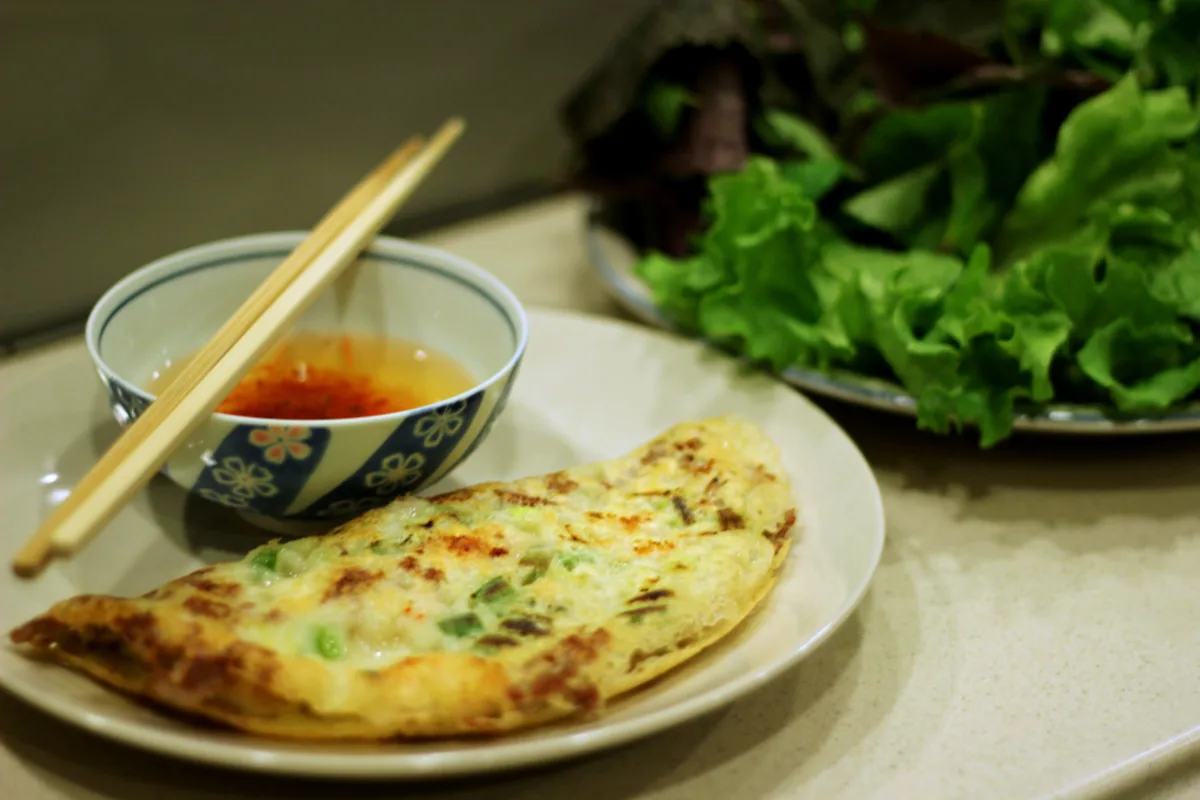
Banh Xeo: The Mekong Delta's Sizzling Rice Crepe, a dish from The Mekong Delta, southern Vietnam
Regional specialty

Banh Xeo: The Mekong Delta's Sizzling Rice Crepe

The Mekong Delta, southern Vietnam

A turmeric-yellow rice flour crepe the size of a dinner plate, fried crisp with shrimp, pork and bean sprouts, then torn up and wrapped in herbs.

~$0.5–$2.5 (15,000–60,000₫) Estimate per crepe: roughly 15,000-30,000d (about US$0.60-1.20) at a roadside or market stall, and 40,000-60,000d (about US$1.60-2.40) at larger places or for premium fillings. One delta-sized crepe feeds one to two people. Prices vary by town and season.
Goi Cuon: Vietnamese Spring Rolls Done Right, a dish from Vietnam, most strongly associated with the south
Worth trying

Goi Cuon: Vietnamese Spring Rolls Done Right

Vietnam, most strongly associated with the south

Fresh, unfried rolls of shrimp, pork, noodles and herbs in translucent rice paper, dipped in a thick peanut and fermented soybean sauce.

~$1–$3 (25,000–80,000₫) Estimate per portion of two to four rolls: around 25,000-50,000d (roughly US$1-2) at a street stall or market, and 40,000-80,000d (roughly US$1.60-3.20) at a sit-down restaurant. Prices vary by city.
Mi Quang: Da Nang's Turmeric Noodle Bowl, a dish from Da Nang and the surrounding central coast
Regional specialty

Mi Quang: Da Nang's Turmeric Noodle Bowl

Da Nang and the surrounding central coast

Wide turmeric-yellow rice noodles under just enough intense broth to coat them, topped with shrimp, chicken, peanuts and a shard of sesame rice cracker.

~$1–$2.5 (25,000–60,000₫) Estimate per bowl: around 25,000-40,000d (roughly US$1-1.60) at a neighborhood place, and 45,000-60,000d (roughly US$1.80-2.40) at busier spots or with premium toppings such as shrimp, ribs or frog. Prices vary.
Newsletter

Vietnam travel tips, once a week

New guides, seasonal advice and the occasional route we think is underrated — straight to your inbox.

No spam. Unsubscribe in one click.

Tiếng Việt