Pu Luong is the terraced valley people go to when Sapa sounds too crowded and Ha Giang too far. This guide covers the road in from Hanoi, what the accommodation labels actually mean, food, costs for three days, and the mistakes first-timers make.
This Pu Luong travel guide is for a first visit made independently, which in this part of Vietnam is easier than buying a package. Pu Luong is a nature reserve of terraced rice, limestone ridges and villages of the Thai and Muong ethnic minorities (upland groups unrelated to Thailand) in Thanh Hoa province, around 160-180km (roughly 100-110 miles) southwest of Hanoi. Almost everything revolves around wherever you sleep, because your hosts arrange the meals, the motorbikes, the drivers and the guides. The work is all in the preparation, not in the arriving.
What Pu Luong actually is
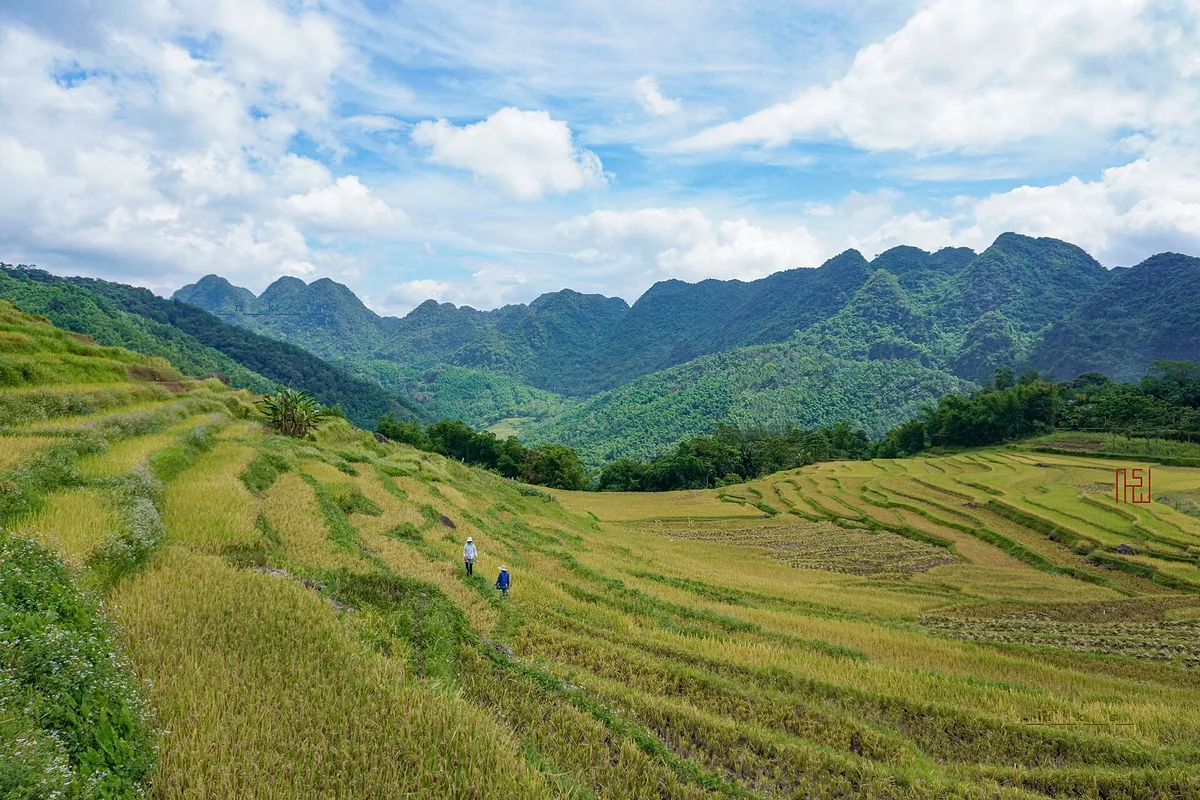
It is a protected reserve rather than a town, spread across the Ba Thuoc and Quan Hoa areas, with farming hamlets scattered through a series of valleys. There is no center, no promenade and no ticket office. The scenery runs on the rice calendar: two crops a year mean the terraces turn gold in late May and again in late September, and are green or bare the rest of the time. People come to walk, to eat at a family table and to sit above a valley doing very little.
Getting to Vietnam, then to Pu Luong
Long-haul flights from North America, the UK, Ireland and Australasia land at Noi Bai airport outside Hanoi, and most nationalities apply online in advance for an electronic visa through the Vietnamese government's official immigration portal. Check the current requirements yourself close to your travel dates, because the rules change. Do not try to reach the reserve on the day you land: give yourself a night in Hanoi to sleep, then start the drive early the following morning.
The road in, and what it is like
- Coach or limousine van from Hanoi toward Ba Thuoc and Canh Nang: roughly 4-5 hours, an estimated 150,000-350,000d each way (roughly US$6-14)
- Private car with a driver, arranged through your accommodation or a Hanoi agency, if you want door to door
- Self-driving through Hoa Binh and Mai Chau: paved but mountainous, with steep grades and blind corners on the final section
- Motorbike only if you already ride confidently on mountain roads, and never after dark
- Arriving by coach, confirm a pickup from the drop-off point in advance, because taxis in the area are almost nonexistent
Getting around inside the reserve
Judge distances by time rather than by kilometers: the roads between villages climb and bend constantly, and 20km (12 miles) can take close to an hour. A rented motorbike is the most flexible option at an estimated 150,000-250,000d a day (roughly US$6-10); check the brakes before you take it. If you would rather not ride, hiring a local motorbike taxi leg by leg costs little more and is the sensible choice for the steep climb up to Son Ba Muoi.
Where to stay, and what eco-lodge means here
There are three broad options: traditional stilt-house homestays in the villages, small hillside resorts of wooden bungalows with an infinity pool over the terraces, and ordinary guesthouses in Canh Nang town. The bungalow places are the ones filling your social feed, and the word eco-lodge here mostly means timber, a valley view and a pool, not certified sustainability. Quality between them varies a lot, so ask about hot water, air conditioning and how far the room is from the parking area, since many involve a long climb.
Eating
There are effectively no restaurants in the villages. Every meal comes from your hosts' kitchen and arrives as a shared spread, at an estimated 150,000-250,000d per person (roughly US$6-10) for dinner. The dishes worth asking for are Co Lung duck, a local stream-raised breed with firm lean meat, charcoal-grilled stream fish, hill pig, the sharply bitter local leaf soup and steamed wild greens. One rule covers it all: order at least half a day ahead, because kitchens shop on market days.
What there is to do
- Walk the lane behind Ban Don at dawn, when mist is still sitting on the terraces
- Hieu waterfall, a 20-30 minute climb each way beside chalky white limestone shelves, in shoes with grip
- Kho Muong, a village in a closed valley, and the large bat cave at its edge, for which you need a torch
- Son Ba Muoi, a cool high plateau of three villages, if you have three days and dry weather
- Pho Doan market on Thursdays and Sundays, arriving before 8am
- The full-day trek to the summit at around 1,700m (roughly 5,600 feet), which requires a local guide
What three days and two nights costs
- Round-trip coach or limousine seat: an estimated 300,000-700,000d per person (roughly US$12-28)
- Shared stilt-house room: around 150,000-250,000d per person per night (roughly US$6-10)
- Private stilt-house room: around 500,000-900,000d a night (roughly US$20-36)
- Hillside bungalow with a pool: from about 1,200,000d a night (roughly US$48) upward
- Food for the whole trip eating at your homestay: around 400,000-700,000d (roughly US$16-28)
- Motorbike rental and fuel for two days: around 400,000-600,000d (roughly US$16-24)
Settle four things in the message that books your room: the room rate and what it includes, the price of dinner, whether they will collect you from the coach drop-off, and the motorbike hire. Hosts in Pu Luong routinely arrange all four, and agreeing it in writing beforehand means you are not negotiating each item on arrival, when you have no alternative.
Pu Luong travel guide: mistakes people make on a first trip
- Packing too many places into one day, forgetting how slowly the mountain roads travel
- Failing to draw cash before entering the villages, where there are no ATMs
- Climbing beside Hieu waterfall in flip-flops, on rock far more slippery than it looks
- Bringing no jacket because it is summer, when valley nights and the high plateau both get cold
- Booking accommodation days rather than weeks ahead during a harvest window or a public holiday
- Riding a rented motorbike up to Son Ba Muoi in the rain or without mountain experience