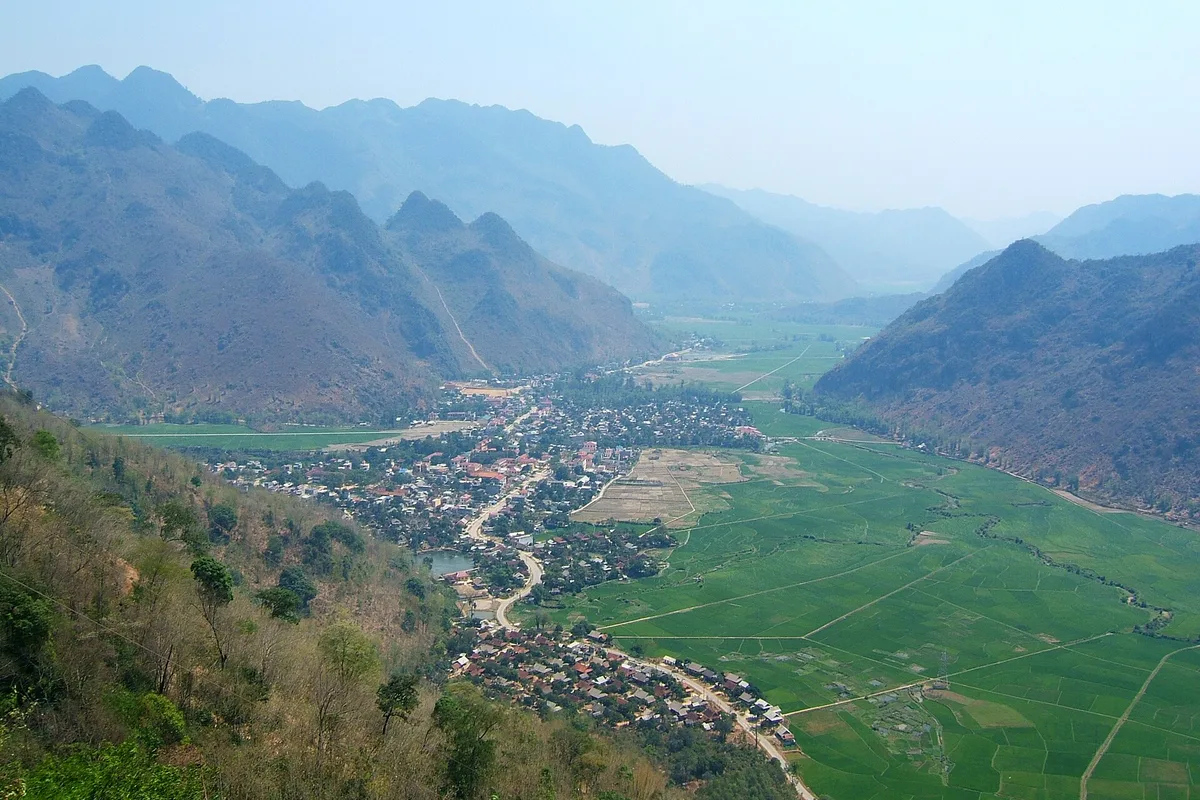
Mai Chau is comfortable in every month of the year, so choosing a season here is really about timing the rice. The valley harvests twice, which gives you two gold windows, one bright green one, and a quiet winter nobody photographs.
Mai Chau is a flat green valley ringed by limestone hills roughly 140km (about 87 miles) west of Hanoi, and unlike the high mountains further north it is comfortable in more or less every month of the year. That makes the best time to visit Mai Chau less a question of avoiding bad weather and more a question of timing the rice. The valley floor is one continuous paddy with two harvests a year, so it cycles between bright green, gold and bare brown mud on a fairly predictable schedule. Here is the year, month by month, and what each stretch actually looks like on the ground.
The climate in one paragraph
Mai Chau sits at a modest elevation in the mountains west of the capital, low enough to stay green and mild but high enough to shed the worst of the Red River delta heat. Summers are warm and humid with afternoon downpours, winters are cool rather than cold, and mist lies on the valley floor most mornings from November to March. Nothing here approaches the winter chill of Sapa, and nothing closes for the season. The variables that actually shape your trip are the state of the rice, the amount of rain falling on the mountain road, and how full the homestays are on a given weekend.
May and June: the first rice harvest
The first crop ripens in late May and early June, and for two or three weeks the whole valley floor turns gold. This is the most photographed period of the year, with the paddies cut in irregular blocks as families harvest at their own pace. It also lands exactly when Hanoi becomes genuinely unpleasant, in the mid to high thirties Celsius (the nineties Fahrenheit) with heavy humidity. The valley runs a few degrees cooler and feels cooler still. Book a homestay well ahead for these weekends, because Vietnamese visitors know the dates too.
September and October: the second harvest and the clearest air
The second crop comes in from late September into October, and for most visitors flying in from abroad this is the better of the two windows. You get the same gold paddies plus the northern autumn: lower humidity, long clear afternoons and the best light of the year from Thung Khe Pass, the mountain pass on the road in. It is also the most dependable stretch for anything involving two wheels, since the heavy rains have usually finished. If your Vietnam dates are still flexible, build them around this month.
March and April: young green rice
In March and April the new crop is up but nowhere near ripe, so the valley is an intense young green rather than gold. It is arguably the more pleasant time to actually be there: mild days, cool evenings, thinner crowds than harvest weekends and close to ideal conditions for cycling the lanes between the fields. Spring also brings white ban blossom, the bauhinia trees that flower across northwestern Vietnam, along with plum blossom on the hillsides and Thai new-year festivities in the villages.
January to early March: mist, festivals and cool nights
Deep winter here means daytime temperatures that feel like a mild European spring and nights that call for a fleece. The fields are often bare or freshly planted, so it is the least scenic stretch of the year, but it is also the quietest and the cheapest, and fog can sit in the valley until mid-morning. Lunar New Year falls in late January or February depending on the year, empties Hanoi and fills rural homestays for a week either side, so check the dates before you plan around them.
July and August: warm, wet and very green
This is peak rainy season across northern Vietnam. Rain in Mai Chau usually arrives as heavy afternoon bursts rather than all-day drizzle, and the valley between harvests is a saturated green that photographs beautifully under cloud. The catch is the road: Highway 6 climbs over a pass to reach the valley, and after prolonged rain there can be landslips and long delays. Give yourself schedule slack, do not ride a motorbike over the pass in bad weather, and treat any timed onward connection the following day with suspicion.
November and December: bare fields, empty lanes
After the autumn harvest the paddies are cut back to stubble and mud, and the valley looks plain. The weather, on the other hand, is excellent: dry, cool and clear, with prices and crowds at their lowest point of the year. Come now if what you want is the village, the food and the cycling rather than the postcard, and if you would rather have the lanes to yourself than share them with tour groups up from Hanoi for the day.
Fitting the best time to visit Mai Chau into a two-week trip
Mai Chau is a two-night detour from Hanoi, not somewhere you cross the world for, so the season that matters most is the one you were already coming in. If you are in northern Vietnam in October, add it. If you are here in June, it works as a cool-down between city days. The single month to think twice about is August, when the pass is least reliable, and the single week to book far ahead is whichever one Lunar New Year lands in.
Rice calendars are not train timetables. Harvest dates move by a week or two with the weather, and neighboring families cut on different days, so a valley described as gold on a given date may already be half stubble. If the ripe paddies are the reason you are going, ask your homestay a week beforehand what the fields actually look like, and be willing to shift a day either way.
Before you book
- Harvest gold: aim for late May into early June, or late September into October
- Bright green paddies and the best cycling weather: March and April
- Fewest people and lowest prices: late November through December
- Pack a fleece and a light rain layer for any month between November and March
- Book homestays two to four weeks ahead for harvest weekends, public holidays and Lunar New Year
- Allow buffer time around the mountain pass in July and August