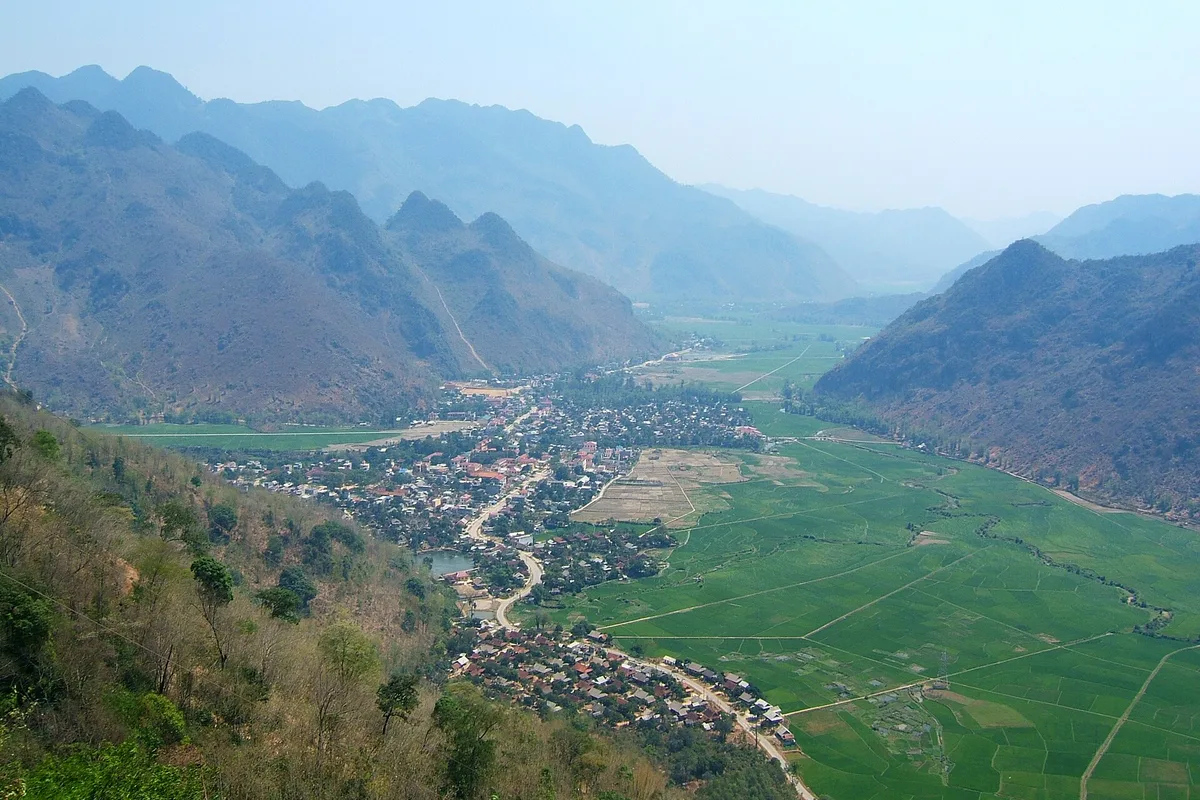
Three days is the version of Mai Chau that includes a day in Pu Luong next door. Here is the plan hour by hour, with road times from Hanoi, rough costs, and the two or three decisions that actually change the trip.
Three days is the version of Mai Chau that includes the neighboring valley of Pu Luong, and it is the trip most people wish they had booked after doing it in two. You get one full day of cycling between the paddies, two evenings in a stilt house and a last day that goes somewhere new instead of straight back to the city. If you have been looking for a Mai Chau itinerary 3 days long, this is a workable one, with the road times, the rough costs and the decisions that matter.
Mai Chau itinerary 3 days at a glance
- Day one: Hanoi to Mai Chau over Thung Khe Pass, check into a stilt house in Ban Lac, village walk, homestay dinner
- Day two: cycle the valley at dawn, Pom Coong village, Chieu Cave, Go Lao Waterfall in the afternoon
- Day three: Pu Luong for the terraces, or a slow morning and the textile stalls, then back to Hanoi
- Total: two nights in the valley and roughly nine hours of driving spread across the three days
Getting there from Hanoi
Almost everyone arrives via Hanoi, which is where your international flight lands. Mai Chau is roughly 140km (about 87 miles) west on Highway 6: four to five hours by public bus from the city's western bus stations at an estimated 100,000 to 160,000d each way (roughly US$4 to 6.50), or three to four hours in a private car or tourist minibus, which costs considerably more but collects you from your hotel. Riding a motorbike is popular with Vietnamese travelers, but the pass is steep and busy with trucks, so it is not the road to learn on.
Day one: the pass, Ban Lac and dinner on the floor
Leave Hanoi mid-morning and stop at Thung Khe Pass, a roadside viewpoint where stalls sell grilled corn and boiled eggs and the whole green floor of the valley opens up below you. Down in Mai Chau, check into a stilt house in Ban Lac, the best known of the Thai villages, where you sleep on a mattress laid out on a polished wooden floor. Spend the afternoon walking the village and watching weavers at their looms, then eat the standard homestay dinner: com lam (sticky rice roasted inside a length of bamboo), grilled hill chicken, small stream fish and wild greens.
- Morning: Hanoi to Mai Chau, stopping at Thung Khe Pass for the view
- Afternoon: check in at Ban Lac, walk the village, look at the textile stalls
- Evening: homestay dinner, plus xoe dancing and ruou can (rice wine drunk through long bamboo straws from a shared ceramic jar) if a group has booked a performance
Day two: the valley by bicycle
Get up early. Mist sits on the paddies until the sun clears the ridge, and the village is at its best before the day groups arrive from Hanoi. Homestays rent bicycles for an estimated 50,000 to 100,000d a day (roughly US$2 to 4), and the lanes between the fields are flat, quiet and almost impossible to get lost in. Ride out to Pom Coong, the village next door, then climb the stone stairway to Chieu Cave for stalactites and a view back over the whole valley. In the afternoon, head to Go Lao Waterfall, about an hour away, where you can swim.
- Dawn: walk or ride the paddy lanes before breakfast, which is the best hour of the day
- Morning: Pom Coong village, then the climb up to Chieu Cave
- Afternoon: Go Lao Waterfall, or Mo Luong Cave if you would rather stay close
- Evening: a second homestay dinner, usually quieter than the first
Rent the bicycle rather than the motorbike. The valley is flat, the distances are tiny, and the pace is the entire point: you notice the buffalo, the looms under the houses and the children shouting hello, none of which registers at 40km per hour. Save the motorbike for the day you leave the valley floor.
Day three: Pu Luong, or a slow morning
The last day splits two ways. Pu Luong is a nature reserve of terraced hillsides, bamboo waterwheels and small lodges roughly two hours south, and it is the more spectacular of the two landscapes; a day trip works, though a night there is better if your schedule allows. The alternative is to do very little: another ride through the fields, a long breakfast, and time at the village stalls buying woven textiles before the afternoon drive back to Hanoi. Neither is wrong, and heavy rain will often make the choice for you.
What this trip costs
Mai Chau is inexpensive by any standard, and the biggest variable is where you sleep. These are per-person estimates, and they move with the season and the size of your group.
- Return transport from Hanoi: roughly 200,000 to 320,000d (about US$8 to 13) by public bus, more for a private car
- Two nights in a stilt house: roughly 200,000 to 800,000d (US$8 to 32), a shared floor being the cheap end
- Bicycle or motorbike rental: roughly 50,000 to 200,000d a day (US$2 to 8)
- Food and entry tickets: roughly 500,000 to 900,000d (US$20 to 36) across the three days
- Realistic total: roughly 1,200,000 to 2,500,000d per person (US$48 to 100)
Booking and transport notes
- Book the homestay ahead for harvest weekends and Vietnamese public holidays, when the valley fills up
- Ask whether dinner is included, because it usually is and it is the meal worth having
- Arrange your seat back to Hanoi on arrival rather than on the last morning
- Carry cash in small notes, since card payment is unreliable outside the resorts
- Leave slack in the schedule in July and August, when heavy rain can slow the pass road
