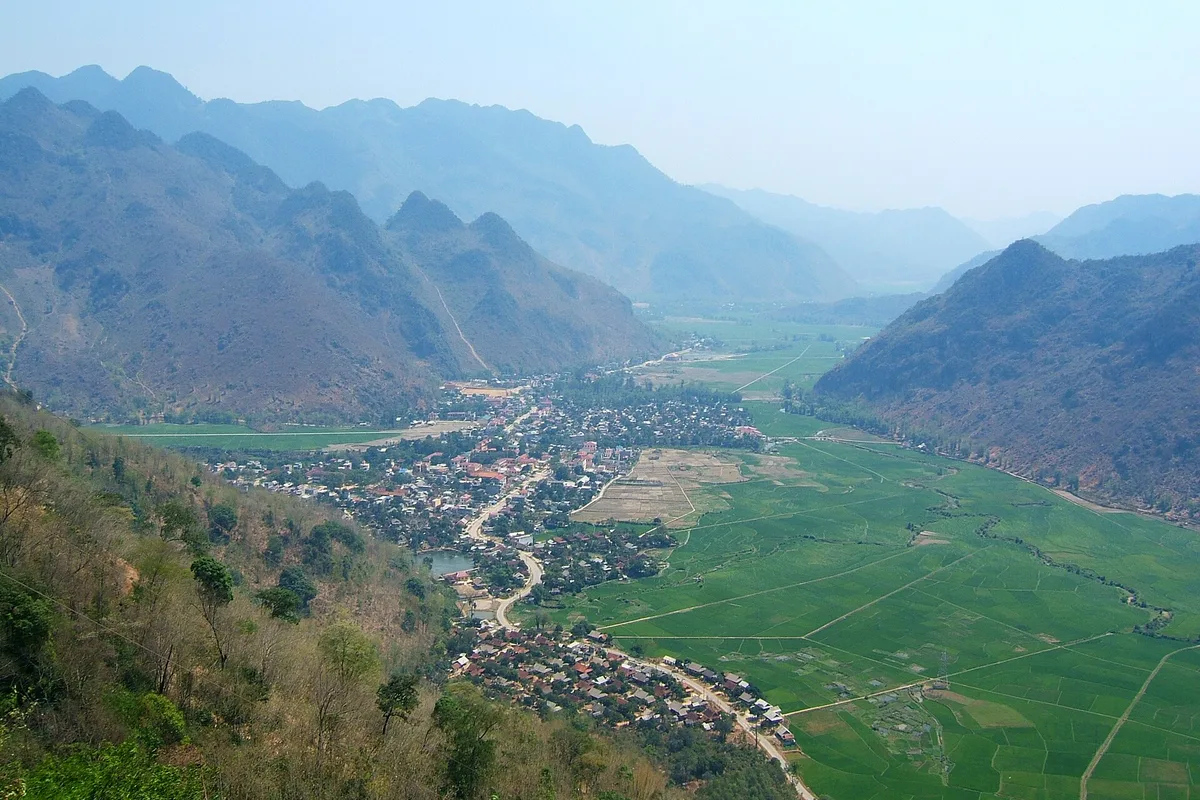
Dinner in Mai Chau is a shared spread eaten on the floor at a low table, and it is Thai ethnic minority cooking rather than the food you ate in Hanoi. Here is every dish explained, plus how to order it and what to bring home.
Dinner is not a side event in Mai Chau, it is the reason the evening works. You will almost certainly eat at your homestay, sitting on the floor around a low table in front of a spread of eight or ten shared dishes, and the cooking is Thai ethnic minority food rather than the Vietnamese food you ate in Hanoi: smokier, more herbal, built around what the hills and the streams provide. This is what to eat in Mai Chau, what each dish actually is, and how to order it if you find yourself away from the homestay table.
The stilt-house dinner, explained
A homestay dinner is a set spread, not a menu. For an estimated 150,000 to 250,000d a head (roughly US$6 to 10) you get rice, a grilled meat, a fish, a soup, two or three vegetable dishes and a dipping salt, all shared. You sit on the floor at a low table, everything arrives at once rather than in courses, and portions are generous. Tell your host in advance if anyone in your group does not eat meat, because the default is heavily carnivorous and the substitution takes planning rather than improvisation.
Com lam: rice roasted in bamboo
The signature dish of the region. Upland sticky rice is packed into a length of green bamboo with a little water, sealed and roasted over charcoal until it steams inside its own tube. You peel back the charred outer layer and eat the rice as a fragrant cylinder, with sesame salt or alongside grilled meat. It tastes faintly of the bamboo it cooked in, it travels well, and you will see it sold in bundles at roadside stalls and up at the pass.
Hill chicken, black pig and stream fish
The protein on the table comes from animals raised loose on the hillsides rather than in sheds, and the difference in texture is obvious: firmer, leaner meat with more flavor and a good deal more bone to work around.
- Ga doi: free-range hill chicken, either grilled over charcoal or boiled and served with a salt, lime and chili dip
- Lon man: a small local black pig, usually roasted or grilled in strips with a thick layer of crackling
- Ca suoi nuong: small stream fish rubbed with mountain herbs and grilled whole in a split bamboo clamp, eaten bones and all
- Rau rung: seasonal wild greens gathered on the hillsides, usually blanched or quickly stir-fried
Thit trau la lom, the regional specialty
The dish most associated with this corner of the country is thit trau la lom: water buffalo simmered slowly with la lom, a wild sour leaf, until the meat softens and the broth takes on a gentle sourness that cuts the richness. It is closer to a stew than a stir-fry and it is served hot with rice. Buffalo turns up in another form too, as thit trau gac bep, strips of meat smoked over the kitchen fire until dry, chewy and intense, then torn into shreds and eaten as a snack with beer.
Bamboo shoots, wild greens and cham cheo
Vegetables here are foraged as much as farmed, and the seasonings are what make a meal northwestern rather than generically Vietnamese.
- Mang dang: bitter bamboo shoots, boiled or stir-fried, an acquired taste worth acquiring
- Sour pickled bamboo shoots, cooked down with meat or fish
- Mountain herbs and seasonal greens you will not have met in the delta
- Cham cheo: the northwestern dipping powder of salt, chili, garlic and mac khen, a citrusy wild pepper in the same family as Sichuan pepper. Dip everything in it
Sticky rice, plain and five-color
Alongside com lam you will meet xoi nep nuong, plain steamed upland sticky rice, and at festivals xoi ngu sac, five-color sticky rice tinted with plant dyes into purple, red, yellow, green and white. The colors are not decoration invented for visitors; the shades carry meaning in local tradition. Sticky rice is breakfast as often as dinner here, sold warm in a banana leaf at the morning market for very little money.
Ruou can, the shared jar
Ruou can is rice wine fermented with herbs in a tall ceramic jar. Water goes in over the top, long bamboo straws are pushed down into it, and several people drink at once while the host quietly refills. It is sweeter and weaker than the clear rice spirit you will be offered elsewhere in Vietnam, which is exactly why people misjudge it. The drinking is a social ritual with rounds and toasts attached, usually paired with dancing, and declining politely is much easier early in the evening than after the third round.
Order dinner when you check in, not at seven in the evening. Nothing here is cooked to order in the way a restaurant kitchen works: the chicken has to be bought, the fish caught, the bamboo cut, and hosts need a few hours of notice. Check-in is also the moment to say if you do not eat meat, which is a far harder conversation to have once you are sitting at the table.
Where to eat, and what to take home
The homestay table is where the good food is. Mai Chau town has small restaurants and rice and noodle shops that are perfectly fine at lunchtime and unremarkable at night, and the morning market is worth a wander for sticky rice, grilled corn and fruit. For presents, smoked buffalo, bamboo-roasted rice and sealed packets of cham cheo all travel well and are sold at village stalls and at the stands on the pass.
Practical notes on what to eat in Mai Chau
- Budget roughly 150,000 to 250,000d (US$6 to 10) for a full homestay dinner, with drinks extra
- Order in advance, because almost nothing is available on demand
- Vegetarians should give notice and can expect tofu, eggs, bamboo shoots and greens
- Carry cash in small notes, since nothing at village level takes cards
- Grilled meat and stream fish are eaten with fingers as often as with chopsticks
- Go easy on the shared jar if you are riding or driving anywhere the next morning